
How to Get Rid of Roaches in Your Jacksonville Home
Finding a cockroach in your home is unsettling, whether it is a large roach near the bathroom or a small one disappearing beneath a kitchen appliance. Because different cockroaches behave differently, it can be difficult to know whether one entered accidentally or more are hiding nearby.
Contact Lindsey Pest Services at the first sign of cockroach activity. Identifying the species and understanding where it was found can help determine what is happening and what service your home may need.
Call (904) 559-1759 or request a free roach control quote online. Same-day service may be available.
The Type of Cockroach Changes the Urgency
Not every cockroach sighting indicates the same kind of problem. A large outdoor cockroach may occasionally wander inside, while a small German cockroach is more likely to be part of an indoor population.
The following descriptions can help you understand which cockroaches are commonly found in and around homes in the Jacksonville area, as well as what their presence may indicate.
German Cockroaches
German cockroaches are small, tan to light brown, and have two dark stripes behind their heads. German cockroaches are usually found in kitchens, bathrooms, pantries, and other warm areas close to food and water.
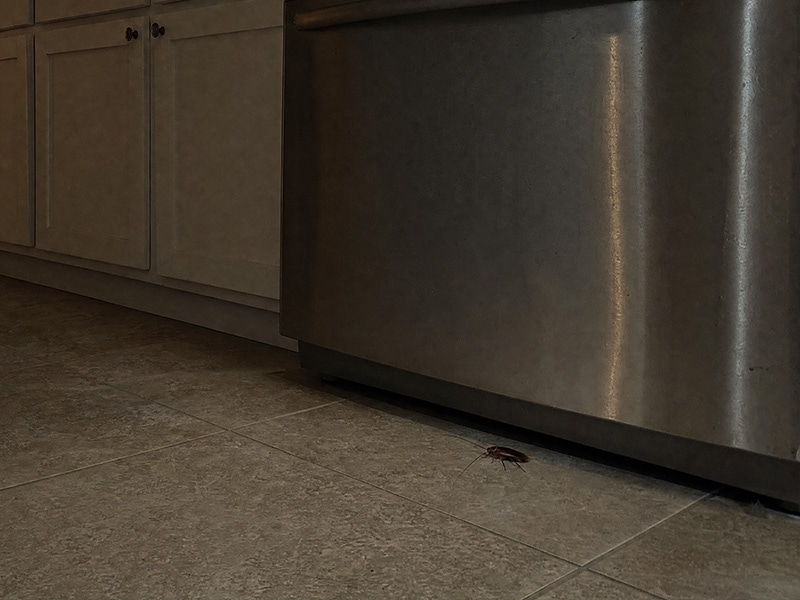
These roaches are particularly concerning because they live and reproduce indoors. They may hide around refrigerators, dishwashers, cabinets, plumbing areas, and other narrow spaces that provide warmth, moisture, and access to food.
American Cockroaches
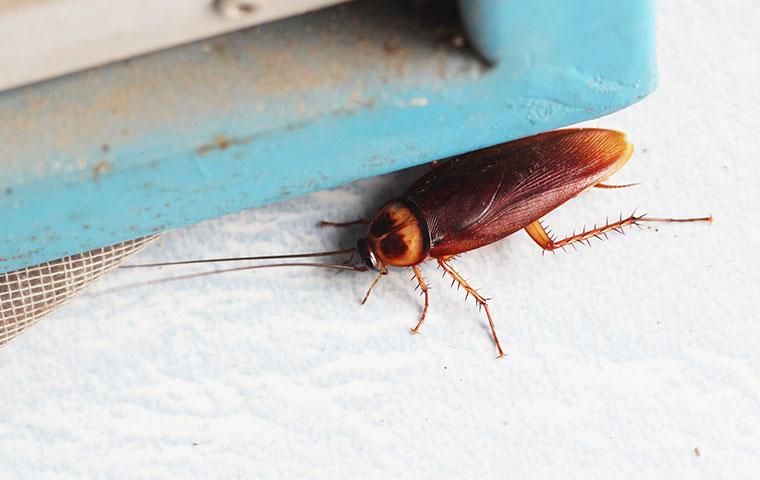
American cockroaches are large and reddish-brown, with a yellow, figure-eight-shaped marking behind the head. They are among the large roaches commonly called “palmetto bugs” in Florida.
American cockroaches generally live outdoors or in warm, damp structural areas. They may enter homes through garages, door gaps, plumbing areas, and other openings while searching for food, moisture, or shelter.
Surinam Cockroaches
Surinam cockroaches have stout, dark bodies, shiny dark heads, and brown or olive-colored wings. They typically live in warm, damp soil beneath leaves, rocks, woodpiles, and other outdoor debris.
Also called greenhouse roaches, they may be carried indoors in potted plants. They are more likely to threaten plants than establish an infestation inside a climate-controlled home.
Asian Cockroaches
Asian cockroaches look similar to German cockroaches, but their behavior is different. Asian cockroaches live outdoors, fly well, and are attracted to lights around doors, windows, patios, and porches.
Because Asian and German cockroaches look so similar, professional identification is important. Confusing an outdoor Asian cockroach with an indoor German cockroach can lead to the wrong assumptions about where the problem originated.
Australian Cockroaches
Australian cockroaches are reddish-brown and have distinctive yellow markings along their wings. They typically live outdoors in warm, damp areas but may enter garages, greenhouses, utility spaces, and homes.
Smokybrown Cockroaches
Smokybrown cockroaches are large, dark mahogany-brown cockroaches commonly associated with trees, leaf litter, gutters, rooflines, and other humid outdoor locations.
They may reach attics or living spaces from overhanging branches, roof openings, or areas where outdoor vegetation touches the house. Homes surrounded by mature trees and dense landscaping may experience greater pressure from this species.
Size can be misleading. A tiny, wingless roach may be a baby cockroach, called a nymph, rather than an adult German cockroach. Nymphs can belong to several species, so size alone is not enough to identify the roach.
The Frequency of Cockroach Sightings Matters, Too
The type of cockroach is only one part of understanding the problem. How often and where you see roaches can provide additional clues about whether one entered accidentally or more may be hiding inside.
Learn more about what a single cockroach sighting may mean.
Cockroach Health and Sanitation Concerns
Cockroaches move through trash, drains, decaying material, animal waste, and other contaminated areas before crossing counters, food packaging, dishes, and bathroom surfaces. Their droppings, saliva, shed skins, and body fragments may also aggravate allergies and asthma symptoms in sensitive individuals.
Prompt attention is particularly important when cockroaches are active near food, children’s belongings, pet supplies, or areas used by someone with asthma or allergies.
Learn more about the health risks associated with cockroaches in Jacksonville homes.
Where Cockroaches Hide in and Around Homes
Cockroaches stay close to the resources they need. Their preferred locations vary by species, but most offer some combination of food, water, warmth, and shelter.
Kitchens
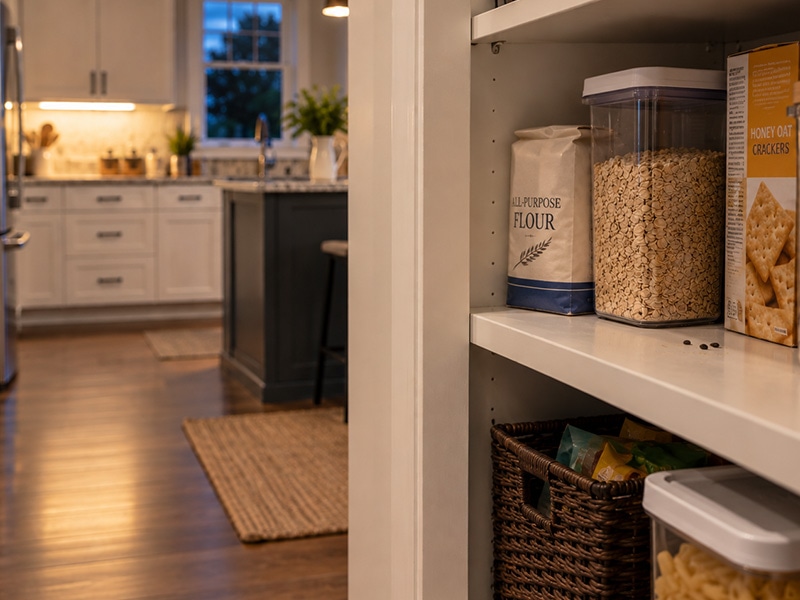
Kitchens provide numerous hiding places around cabinets, plumbing, food storage areas, trash containers, and appliances. Crumbs and spills do not have to be obvious to support cockroach activity. Grease beneath a stove, residue beside an appliance, or pet food left out overnight may be enough.
Small cockroaches can disappear into cabinet joints, wall openings, and narrow spaces around refrigerators and dishwashers. Killing the roach on the counter does not address activity that may remain hidden nearby.
Bathrooms
Bathrooms provide moisture, warmth, and protected hiding places. Cockroaches may be found beneath sinks, around toilets, inside vanity gaps and tub overflow cavities, or near sink, shower, and floor drains—particularly around seldom-used fixtures where plumbing traps may have dried out.
Finding a roach near or inside a toilet does not necessarily mean it traveled through the toilet bowl. It may have approached from a gap around the plumbing, a nearby wall void, or another damp hiding place.
Laundry Rooms and Utility Areas
Laundry rooms may offer moisture from plumbing, condensation, floor drains, and damp materials. Openings around pipes, wires, and utility lines can also provide concealed pathways between walls and rooms.
Garages and Storage Areas
Garages connect the home with the outdoors and often contain cardboard boxes, paper bags, stored pet food, recycling, or other materials that provide food and shelter. Cockroaches may also be carried into a garage inside deliveries, used appliances, or stored belongings.
Attics, Rooflines, and Outdoor Areas
Some outdoor species are associated with gutters, roof debris, trees, mulch, leaf litter, trash areas, and damp materials near the foundation. From these locations, they may find their way into attics, garages, and living spaces.
Apartments and Other Attached Homes
In apartments, townhomes, condominiums, and duplexes, cockroaches can move along shared plumbing, utility openings, wall spaces, and common areas. Activity may continue when the source extends beyond one room or unit.
Why Cockroaches Are Persistent in Northeast Florida
Greater Jacksonville and the surrounding First Coast experience cockroach pressure throughout much of the year. Warm temperatures and moisture support cockroach activity, but weather is only part of the story.
Homes in this region often include garages, patios, lanais, utility areas, mature landscaping, irrigation systems, and other features that connect indoor and outdoor environments. Heavy rainfall can disrupt outdoor hiding places, while dry periods may prompt cockroaches to search for moisture.
Roaches may also enter dwellings and buildings inside cardboard boxes, grocery bags, deliveries, used furniture, or appliances. Plumbing leaks, condensation, stored materials, and shared walls can provide additional resources and pathways. That is why cockroaches can appear in clean, well-maintained homes.
These conditions do not mean Northeast Florida homeowners must accept living with roaches. They mean that effective cockroach control starts with correctly identifying the pest and understanding what is contributing to its activity.
Why Store-Bought Cockroach Products Often Fall Short
The roaches homeowners see may represent only the visible portion of a larger problem. Cockroaches spend much of their time in cracks, cabinet joints, appliance voids, wall spaces, and other protected locations. Killing a visible roach does not address activity that may remain hidden nearby.
Avoid applying store-bought pesticides, including sprays, powders, baits, and foggers. These products may scatter cockroaches, interfere with professional service, or unnecessarily expose people and pets. Contact Lindsey Pest Services before treating the affected area.
Foggers and “bug bombs” are especially concerning. The Environmental Protection Agency warns that fogger propellants can be flammable and that improper use may cause illness, fire, or explosion.
If you have already applied a cockroach product, tell your Lindsey pest professional what you used and where you applied it.
What to Do While Waiting for Professional Service
After contacting Lindsey, homeowners can take a few practical steps to support a cleaner and safer living environment:
-
Note where and when cockroaches were seen.
-
Clean and disinfect food preparation surfaces.
-
Store food and pet food in closed containers.
-
Remove accessible crumbs, grease, and spills.
-
Take out the trash and clean the residue from the container.
-
Correct obvious leaks or standing water.
-
Avoid moving potentially infested boxes or appliances into another room.
Cleaning alone will not necessarily eliminate an infestation, and finding cockroaches does not mean a homeowner has failed to keep the house clean. These steps simply reduce the food and moisture available to cockroaches while professional service is arranged.
Get Help With Cockroaches and Keep Your Home Protected
Lindsey Pest Services can inspect your property, identify the cockroach involved, determine where activity is concentrated, and recommend the appropriate service for your home.
Once the immediate problem has been addressed, ongoing home pest control can help protect your property from cockroaches and other common household pests year-round. Continued professional service helps homeowners maintain protection instead of waiting for another pest problem to become established.
Lindsey Pest Services has served Northeast Florida homeowners since 1957. Our local, woman-owned company provides cockroach control and residential pest control throughout Greater Jacksonville, along the First Coast, and in parts of Flagler County, including Palm Coast and Bunnell.
Do not wait for a cockroach sighting to become a recurring problem. Call (904) 559-1759 or request your free pest control quote today.