

 Average rating of 4.9 out of 5 stars from 1153 reviews. Read Google Reviews
Bald-Faced Hornet Identification in Northeast Florida
A large black-and-white wasp flying around a tree or shrub may be a bald-faced hornet. Homeowners often notice these stinging insects after finding a gray, enclosed nest hanging from a branch, shrub, eave, or another elevated surface.
Despite its name, the bald-faced hornet is not a true hornet. Dolichovespula maculata is a species of yellow jacket distinguished by its black-and-white coloring and aerial nest. It is one of the native vespine wasps found in Florida.
Bald-faced hornets look very different from the yellow-and-black yellow jackets commonly encountered around homes. Their nests are different, too. Rather than nesting primarily underground or inside protected voids, bald-faced hornets build enclosed paper nests above ground.
Bald-faced hornets are generally active from spring through fall in Northeast Florida. Their nests and worker activity are usually most noticeable during the summer and early fall.
When Are Bald-Faced Hornets Most Active?
Bald-faced hornets are generally active from spring through fall in Northeast Florida. Their nests and worker activity are usually most noticeable during the summer and early fall.
What Do Bald-Faced Hornets Look Like?
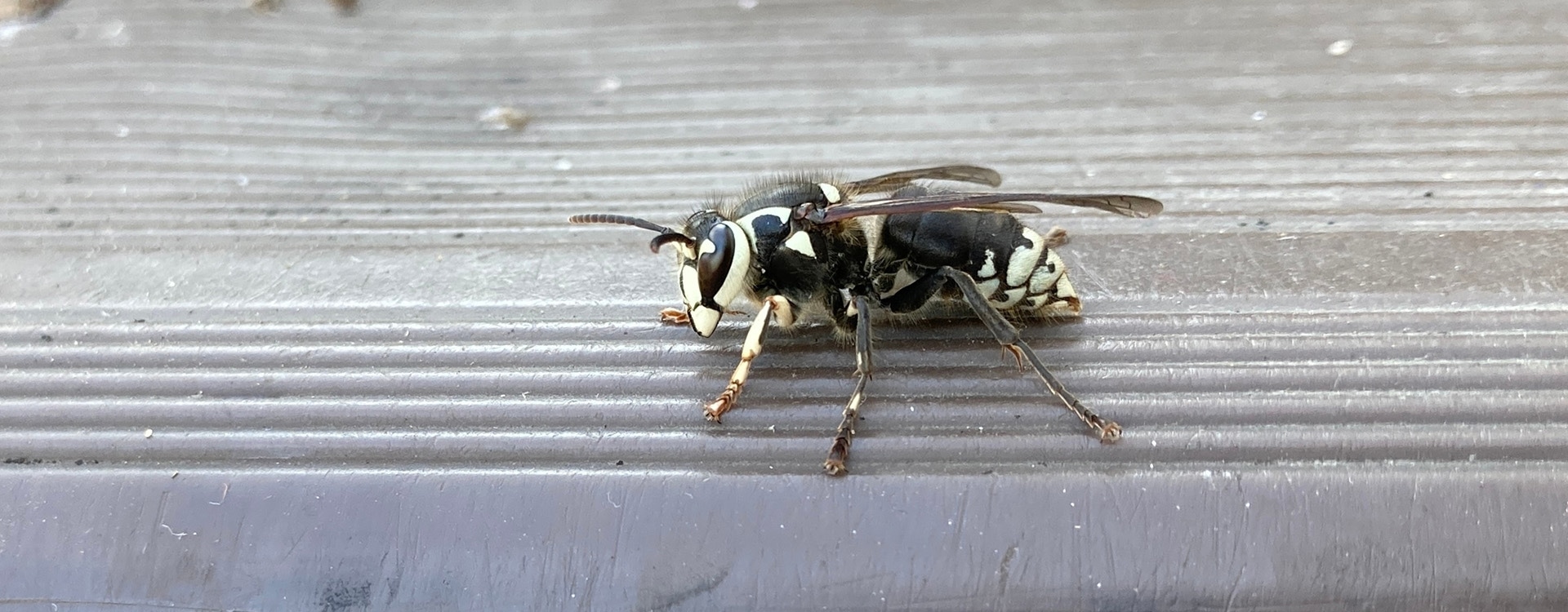
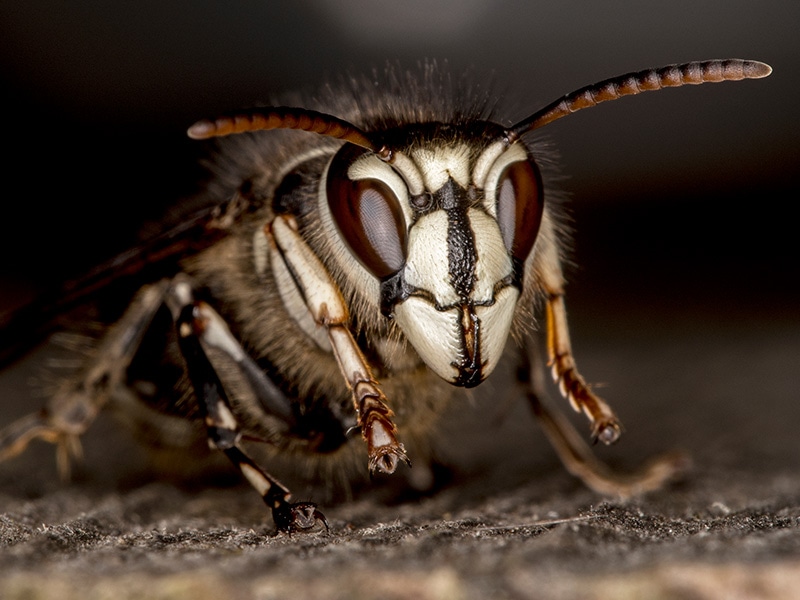
Bald-faced hornets can be identified by several features:
-
A mostly black body with contrasting ivory-white markings
-
A white or pale face
-
White markings near the end of the abdomen
-
Workers measure about half an inch to three-quarters of an inch long, with queens generally larger than workers
-
A smooth body without the fuzzy appearance associated with bees
-
Dark wings that fold along the back when the insect is at rest
The combination of their relatively large size, black-and-white coloring, and enclosed aerial nest helps distinguish bald-faced hornets from the yellow-and-black wasps commonly found around properties in Northeast Florida.
Bald-Faced Hornet Nests and Where They Build Them
The nest is often the easiest way to recognize a bald-faced hornet colony. It is usually:
-
Gray or grayish brown
-
Made from layers of paper-like material
-
Rounded, egg-shaped, or football-shaped
-
Fully enclosed around the inner combs
-
Built with an opening near the lower portion of the nest
Bald-faced hornets make this paper by chewing weathered wood and other plant fibers and mixing the material with saliva.
Their enclosed nests differ from the open combs built by paper wasps, where the individual cells remain visible. They also differ from the nests of the yellow jackets found underground or inside protected spaces around structures.
Bald-faced hornet nests may be attached to:
-
Tree branches
-
Dense shrubs
-
Eaves and roof overhangs
-
Porch ceilings
-
Sheds and other outdoor structures
-
Fences or other elevated, seldom-disturbed surfaces
Around Jacksonville, the First Coast, and Flagler County, these nests are most likely to cause problems when they are built near doors, walkways, patios, pools, play areas, or landscaping that must be regularly maintained.
A nest high in a tree and away from normal activity may remain unnoticed for much of the season. Problems are more likely when a nest is built at head height in a shrub, above a doorway, beside a walkway, or near an area where someone trims branches, maintains landscaping, cleans gutters, or works from a ladder.
Nests sometimes become easier to spot later in the year as they grow larger or leaves begin to thin.
Are Bald-Faced Hornets Dangerous?
Bald-faced hornets are predators that capture flies, caterpillars, and other insects. They generally do not seek out people, but workers will defend their colony when they perceive a threat near the nest.
Unlike honey bees, bald-faced hornets can sting more than once. A person who disturbs an occupied nest may be stung by multiple workers.
Common accidental encounters happen when someone:
-
Trims a shrub containing a hidden nest
-
Trims branches or operates equipment close to a low-hanging nest
-
Places a ladder near a nest under an eave
-
Pressure-washes an occupied overhang
-
Reaches into dense landscaping without seeing the nest
-
Walks beneath a nest positioned above a doorway or path
Stings are painful and can cause swelling around the affected area. They can also cause a serious allergic reaction in a sensitive person. Anyone experiencing trouble breathing, swelling of the face or throat, dizziness, or another severe reaction after a sting should seek emergency medical care.
What Attracts Bald-Faced Hornets?
Bald-faced hornet queens look for protected places to build their nests, while workers search the surrounding area for food, water, and nest-building materials.
Properties may offer:
-
Protected branches in trees and dense shrubs
-
Eaves, overhangs, and other sheltered exterior surfaces
-
Weathered wood and plant fibers used to build the nest
-
Flies, caterpillars, and other insects that workers collect to feed developing larvae
-
Flowers, tree sap, ripe fruit, and other sugar sources for adult wasps
-
Water from irrigation or landscape features during hot, dry weather
Seeing one bald-faced hornet does not necessarily mean the nest is nearby. Workers may travel away from the colony to forage, but repeated activity around the same tree, shrub, or overhang can point to a nest in that area.
Signs of a Bald-Faced Hornet Nest
Signs of an active colony can include:
-
A gray, enclosed paper nest in a tree, shrub, or under an overhang
-
Black-and-white wasps repeatedly entering and leaving one opening
-
Frequent wasp activity around the same branch or section of landscaping
-
Workers collecting fibers from weathered wood
-
Wasps capturing other insects around landscape plants
Small spring nests can be difficult to see. By late summer, the same colony may have produced a much larger nest with steady activity around the entrance.
Do not shake branches, strike the nest, or move closer to confirm that it is occupied. Activity can usually be observed from a distance.
How to Get Rid of Bald-Faced Hornets
Eliminating a bald-faced hornet colony requires treating the occupied nest. This can be dangerous without the proper protective equipment, treatment materials, and access to the nesting location.
Spraying the outside of the paper envelope may not reach the colony inside. Knocking down the nest, spraying it with a garden hose, sealing the entrance, or cutting the supporting branch can cause workers to rush out and defend it.
Height creates another risk. Many nests are located in trees or beneath rooflines where a ladder cannot be used safely while stinging insects are active.
Professional bald-faced hornet control begins with confirming the insect and locating the nest. The technician can then evaluate:
-
Whether the nest is currently active
-
Its height and accessibility
-
Its distance from doors, walkways, and occupied areas
-
The safest way to treat the colony
-
Whether the nest can be removed after activity has stopped
An abandoned nest does not contain a colony and will not be reused the following year. However, homeowners should not assume a nest is empty simply because activity is not visible at that moment.
Call Lindsey Pest Services for Bald-Faced Hornet Control
If you find a gray aerial nest around your home, do not risk disturbing it to get a closer look. Lindsey Pest Services provides professional wasp and hornet control in Jacksonville, along the First Coast, and in Flagler County.
Our team will inspect the area, identify the stinging insect, locate the nest, and recommend an appropriate treatment and removal approach based on its location.
Lindsey’s ongoing home pest control plans include wasp nest removal up to 10 feet from the ground. Our team can determine whether the nest on your property is accessible and falls within the plan’s coverage.
Found a nest on your property? Contact Lindsey Pest Services for a free quote and professional bald-faced hornet control.
Bald-Faced Hornet FAQs
Do Bald-Faced Hornets Usually Nest Inside Walls?
No. Bald-faced hornets typically build visible, enclosed paper nests in trees, shrubs, or on exterior surfaces. Stinging insects repeatedly entering a wall gap, soffit opening, or utility penetration may be cavity-nesting yellow jackets or another wasp species and should be professionally identified.
Do Bald-Faced Hornets Swarm?
Bald-faced hornets do not swarm to establish new colonies the way honey bees do. However, many workers may emerge from an occupied nest when it is disturbed, which can look like a swarm.
Can Bald-Faced Hornets Sting Dogs and Other Pets?
Yes. A dog or other pet that approaches or disturbs a low nest may be stung, potentially by multiple workers. Keep pets away from the area and contact a veterinarian promptly if a pet develops facial swelling, trouble breathing, weakness, vomiting, or other concerning symptoms after a sting.
Lindsey Pest Services is trusted by over 23,000 happy customers







Get Your Free Pest Control Quote Today!
Complete the form below to get started with your free, no-obligation quote, and a Lindsey Pest representative will contact you shortly.
Same Day Service Available!