
 Average rating of 4.9 out of 5 stars from 1153 reviews. Read Google Reviews
Yellow Jacket Identification for Jacksonville & Northeast Florida
Yellow jackets are among the most aggressive stinging insects homeowners encounter in Jacksonville and Northeast Florida. Although they’re often mistaken for bees, yellow jackets are actually wasps. They’re known for their black-and-yellow markings, quick movements, and tendency to become defensive when their nest is disturbed. In this region, the two most common species are the Eastern yellow jacket (Vespula maculifrons) and the Southern yellow jacket (Vespula squamosa)—both of which can build nests around homes and become a problem quickly.
If you’re seeing yellow-and-black stinging insects around your yard, trash cans, eaves, or landscaping, it’s a good idea to figure out whether you’re dealing with yellow jackets before the problem gets worse.
When Are Yellow Jackets Most Active?
In Jacksonville and throughout Northeast Florida, yellow jackets can be active for much of the year thanks to the region’s warm climate. Activity typically ramps up in early spring, peaks through summer, and often continues well into fall. As temperatures cool, most colonies die off, leaving only fertilized queens to remain dormant until conditions warm up again.
Because temperatures stay mild, it’s not unusual to see yellow jackets earlier—and later—than in cooler parts of the country. You’re most likely to notice increased activity around outdoor spaces where food and water are available, especially during the warmer months when colonies are growing.
What Do Yellow Jackets Look Like?
Yellow jackets are small, smooth-bodied wasps with:
-
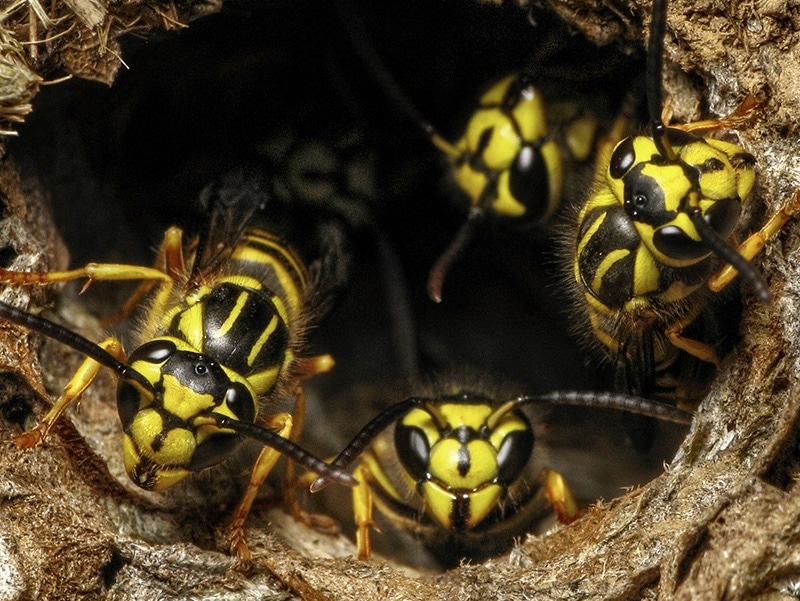
Bright yellow and black striping (patterns may vary slightly by species)
-
Black antennae
-
A more compact body than a paper wasp
-
Shorter legs that do not dangle much in flight
Unlike fuzzy bees, yellow jackets have a sleek, shiny appearance. While the Eastern yellow jacket and Southern yellow jacket found in Northeast Florida may differ slightly in markings, both share the same bold coloring and fast, purposeful flight that make them easy to recognize around homes.
Are Yellow Jackets Bees?
No. Although they are often called bees, yellow jackets are actually wasps. The mix-up is common because of their coloring, but there are a few easy ways to tell the difference.
Bees tend to look fuzzier and rounder, while yellow jackets look smoother, leaner, and more intense in flight. Bees are usually more interested in flowers, while yellow jackets are often drawn to food, garbage, sugary drinks, and other human activity.
Where Do Yellow Jackets Nest?
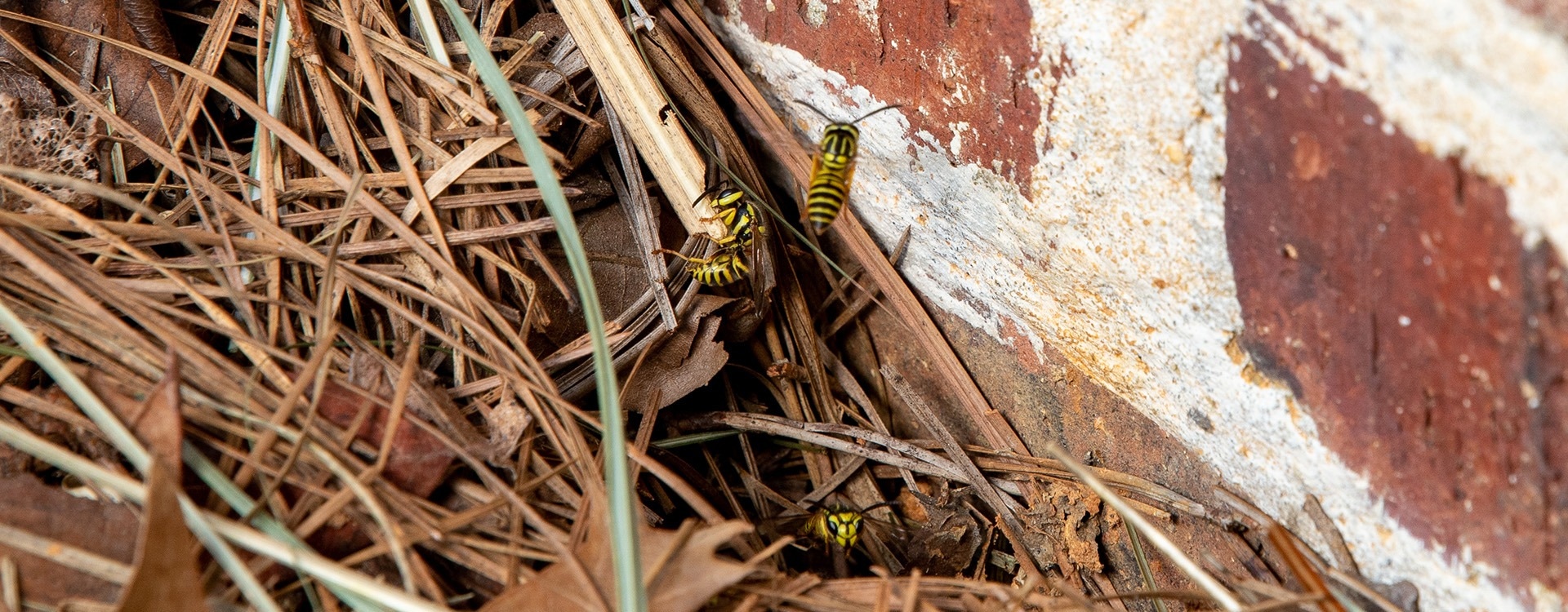
Yellow jackets build nests in hidden, protected areas, making them difficult to spot until activity increases.
In Northeast Florida, they commonly nest in:
-
Wall voids
-
Ground cavities
-
Voids around structures
-
Landscaping features and hidden areas in the yard
Some nests are underground and only noticeable by increased wasp activity entering and exiting a single spot, while others may be inside walls or structural voids around the home.
Why Are Yellow Jackets A Problem?
Yellow jackets are highly defensive and aggressive, especially when their nest is nearby. Unlike bees, they can sting multiple times. They may also attack in groups when threatened.
For homeowners, that can mean:
-
Painful stings
-
Multiple stings in a single encounter
-
Risk of allergic reactions
-
Unsafe conditions around entryways, patios, play areas, and landscaping
Even routine activities like mowing the lawn or working in the yard can disturb a hidden nest.
What Attracts Yellow Jackets?
Yellow jackets are drawn to a variety of food and environmental factors around your home, including:
-
Sugary foods and drinks
-
Protein sources
-
Pet food
-
Exposed garbage or trash cans
-
Fruit trees
-
Standing water
-
Sheltered areas that provide nesting opportunities
Once they find a reliable food source, activity around your home can increase quickly.
Signs of a Yellow Jacket Problem
You may have yellow jackets on your property if you notice:
-
Frequent wasp activity in the same area
-
Insects flying in and out of the ground
-
Wasps entering gaps in siding, walls, or around the home
-
Increased activity around trash, food, or outdoor seating areas
-
Sudden aggressive behavior during yard work
Because their nests are often hidden, repeated activity is usually the first sign of a problem.
How to Get Rid of Yellow Jackets
Dealing with yellow jackets on your own can be risky, especially if a nest is hidden or located near high-traffic areas. Disturbing a nest can trigger aggressive behavior and increase the chance of multiple stings.
The key to solving a yellow jacket problem is locating and eliminating the nest. As long as the nest remains active, yellow jackets will continue returning to the area.
Because nests are often hidden in the ground or inside walls, effective control typically requires identifying the nest location and treating it safely and thoroughly.
If yellow jackets are active around your home, it’s best to contact Lindsey Pest Services for professional treatment.
Call Lindsey Pest Services For Yellow Jacket Control
If you think you’ve found yellow jackets nesting in or around your home, Lindsey Pest Services can help.
Our local, woman-owned company provides wasp and hornet control in Greater Jacksonville and along the First Coast. We will inspect your property, identify where yellow jackets are nesting, and apply targeted treatments to eliminate the problem.
For ongoing protection, our Best Home Pest Control Plan includes coverage for stinging insects, such as yellow jackets, as well as common household pests. This helps reduce the risk of future activity and keeps your home protected year-round.
Need help with yellow jackets? Contact Lindsey Pest Services for a free quote and professional wasp control.
Yellow Jacket FAQs
What is the difference between a yellow jacket and a paper wasp?
Yellow jackets are more compact, with short legs and bold black-and-yellow markings. Paper wasps tend to have longer bodies and longer legs, and their coloring can vary.
Why are yellow jackets attracted to my pool?
Yellow jackets are often drawn to pools because they’re looking for water, especially during hot weather. They may also be attracted to sugary drinks, food, or residue left around pool decks and outdoor seating areas. If you’re seeing consistent activity, it could also mean a nest is nearby, and workers are using your pool as a water source.
How do I treat a yellow jacket sting?
For most people, a yellow jacket sting causes pain, redness, and swelling at the site.
Basic care includes washing the area with soap and water, applying a cold compress to reduce swelling, and using over-the-counter antihistamines or pain relievers (if needed and at your doctor’s discretion).
If you experience severe swelling, difficulty breathing, dizziness, or signs of an allergic reaction, seek medical attention immediately.
Why are yellow jackets so bad in October?
Yellow jackets tend to feel more aggressive in the fall because their colonies are at their largest size. At the same time, their natural food sources start to decline, which makes them more likely to seek out human food and sugary items.
In Northeast Florida, warm fall temperatures can keep them active longer, so it’s common to see increased activity well into October.
Lindsey Pest Services is trusted by over 23,000 happy customers







Get Your Free Pest Control Quote Today!
Complete the form below to get started with your free, no-obligation quote, and a Lindsey Pest representative will contact you shortly.
Same Day Service Available!