
 Average rating of 4.9 out of 5 stars from 1153 reviews. Read Google Reviews
Paper Wasps Around Jacksonville & the First Coast: Nests, Behavior & What to Look For
Paper wasps are one of the most common stinging insects you’ll see building nests directly on homes in Jacksonville, along the First Coast, and throughout Northeast Florida. Unlike yellow jackets, which tend to hide their nests, paper wasps build visible, umbrella-shaped nests in exposed areas—often just a few feet from doors, windows, and outdoor living spaces.
While they’re generally less aggressive, their tendency to nest on structures means homeowners are far more likely to run into them during everyday activities like coming and going, sitting on the porch, or working in the yard.
If you’re noticing long-legged wasps hovering around your eaves or small hanging nests forming around your home, you’re likely dealing with paper wasps.
When Are Paper Wasps Most Active?
In Jacksonville and throughout Northeast Florida, paper wasps can be active for much of the year thanks to the region’s warm climate. Activity typically increases in early spring, builds through summer, and remains high into early fall.
Unlike colder regions, activity doesn’t completely stop in winter. While most colonies die off as temperatures cool, activity is usually limited, and sightings are more likely on warmer days. Fertilized queens overwinter in protected areas and begin starting new nests when conditions warm up again.
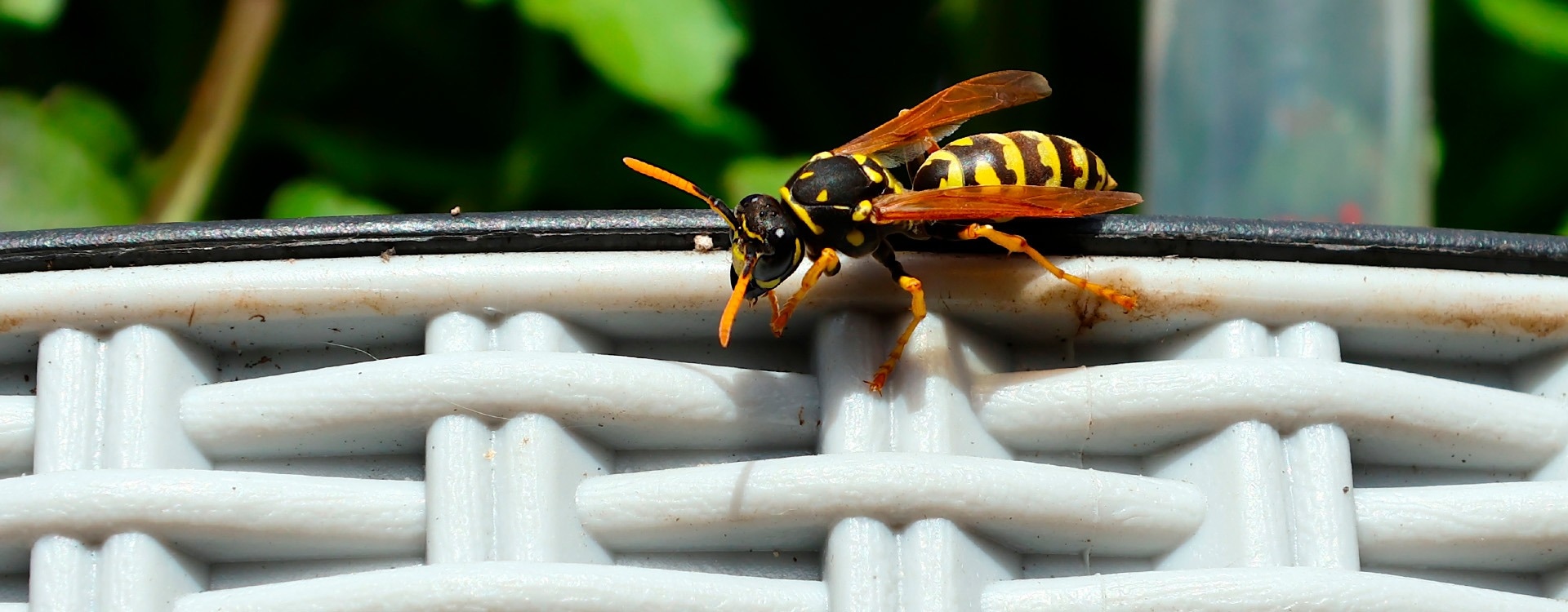
What Do Paper Wasps Look Like?
Paper wasps are easy to distinguish from other stinging insects once you know what to look for.
They typically have:
-
Long legs that hang down during flight
-
A narrow, elongated body
-
Brown, reddish-brown, or yellow markings (depending on species)
-
A smooth, slightly shiny appearance
They tend to fly in a slow, drifting pattern, often hovering around the same area near a nest site.
What Do Paper Wasp Nests Look Like?
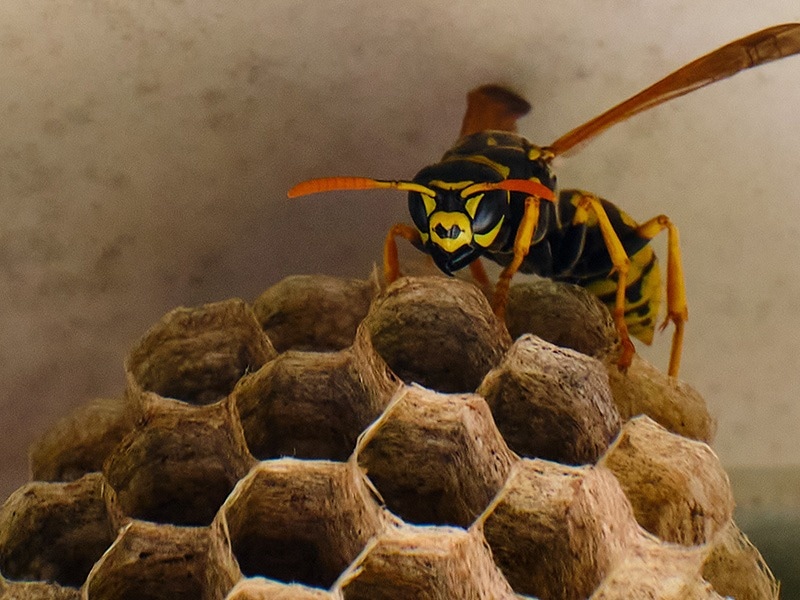
Paper wasp nests are one of the easiest stinging insect nests to recognize. They are open, umbrella-shaped structures made from a gray, paper-like material and are attached to surfaces by a single stalk.
Unlike many other wasp nests, they are not enclosed or hidden, making them easier to spot around your home.
Where Do Paper Wasps Nest?
Even though their nests are fully visible, paper wasps choose protected areas on structures that offer shelter from weather and disturbance.
Around Jacksonville homes, common nesting spots include:
-
Roof eaves and soffits
-
Porch ceilings and overhangs
-
Garages and sheds
-
Outdoor furniture and fixtures
-
Window and door frames
Because the nest is exposed, it’s often the first sign of activity around your home. They’re commonly found in corners, under ledges, and along rooflines—places that are out of direct exposure but still close to everyday activity.
Why Are Paper Wasps a Problem?
Paper wasps become a problem primarily because of where they choose to build their nests. Instead of hiding, they place nests directly on homes—often above doorways, near garages, or around outdoor living spaces. This puts them in close proximity to daily activity.
While they are less aggressive than yellow jackets, they will defend their nest if disturbed. That can make simple routines like opening a door, checking the mail, or relaxing outside uncomfortable or risky.
Another common issue in Northeast Florida is repeat nesting, where wasps return to the same areas season after season if conditions are favorable.
What Attracts Paper Wasps?
Paper wasps are attracted to environments that provide both food and suitable nesting conditions. They are commonly drawn to nectar-producing plants, gardens with caterpillars and insects, standing water, and wooden surfaces they can use to create their nests.
Homes with covered outdoor areas like porches, overhangs, and lanais tend to be especially attractive because they offer ideal protection for nest building.
Signs of a Paper Wasp Problem
You may have paper wasps around your home if you notice wasps flying around eaves or overhangs, small visible nests attached to structures, wasps repeatedly landing in the same area, or increased activity near entryways, patios, or outdoor seating spaces. Because their nests are exposed, spotting the nest is often the clearest sign of a problem.
Paper Wasps vs. Yellow Jackets
Paper wasps and yellow jackets are often confused, but they look and behave quite differently once you know what to watch for.
Paper wasps have long legs that hang down during flight, a more slender body, and tend to move in a slower, hovering pattern. They build open, umbrella-shaped nests that are clearly visible and often attached to eaves, porch ceilings, and other parts of your home.
Yellow jackets, on the other hand, are more compact and move quickly with a direct, darting flight. Their legs do not hang down, and they typically build hidden nests in the ground, inside wall voids, or other enclosed spaces. Instead of seeing the nest, homeowners usually notice them flying in and out of the same spot.
In general, if you’re seeing wasps slowly hovering around your roofline or porch with a visible nest nearby, you’re likely dealing with paper wasps. If you’re noticing fast-moving insects coming and going from the ground or a gap in your home—and especially if they seem more aggressive—you’re more likely dealing with yellow jackets.
How to Get Rid of Paper Wasps
Even though paper wasp nests are easy to see, removing them can still be risky—especially if they’re located near doors, windows, or high-traffic areas. Disturbing a nest can trigger defensive behavior and increase the chance of stings.
The key to control is removing active nests early and treating areas where wasps are likely to return. Because they often reuse the same general locations, simply knocking down a nest without treatment can lead to repeat activity. If paper wasps are building nests on your home, it’s best to have them removed safely and take steps to prevent future nesting.
Call Lindsey Pest Services For Paper Wasp Control
If you’re seeing paper wasps or nests around your home, we can help. As a local, woman-owned company, we provide professional wasp and hornet control across Jacksonville, Greater Jacksonville, and the First Coast. We inspect your property, locate nests, remove them safely, and treat areas where wasps are likely to return.
For ongoing protection, we recommend signing up for residential pest control services.
Our Best Plan includes coverage for stinging insects like paper wasps, along with common household pests—helping keep your home protected year-round.
Need help with paper wasps? Contact Lindsey Pest Services today for a free quote.
Paper Wasp FAQs
Are paper wasps beneficial?
Yes. Paper wasps help control other insects by feeding on caterpillars and garden pests. However, when they build nests on or near your home, they can become a safety concern.
Do paper wasps come out at night?
Paper wasps are mostly active during the day. At night, they return to their nest and are far less active, which is why you’re less likely to see them after dark.
Why do paper wasps seem to follow me around?
Paper wasps aren’t actually following you—they’re usually investigating movement or defending nearby space. If you’re close to a nest (even if you don’t see it), they may hover nearby to assess whether you’re a threat.
Can paper wasps sting more than once?
Yes. Paper wasps can sting multiple times, which increases the risk of painful encounters if a nest is disturbed.
Should I knock down a paper wasp nest?
It’s not recommended. Even small nests can trigger defensive behavior, increasing the risk of stings.
Lindsey Pest Services is trusted by over 23,000 happy customers







Get Your Free Pest Control Quote Today!
Complete the form below to get started with your free, no-obligation quote, and a Lindsey Pest representative will contact you shortly.
Same Day Service Available!