
Summer Stingers: Common Wasps Around Jacksonville Homes
Jul 22, 2026
Wasps become much more noticeable around homes in Jacksonville and throughout Northeast Florida during the summer. You may see them flying beneath the roofline, hovering over the lawn, or repeatedly disappearing into the same shrub, wall opening, or patch of ground.
But not every wasp—or every nest—is the same.
Paper wasps build exposed nests beneath eaves and porch ceilings. Yellow jackets may disappear into small openings in the ground. Bald-faced hornets build large, enclosed paper nests above ground, while mud daubers leave tubes of dried mud on walls and other covered surfaces.
Knowing where these wasps nest and how they behave can help you avoid accidentally disturbing a colony. Here is what homeowners should know about the summer stingers they may encounter around their properties.
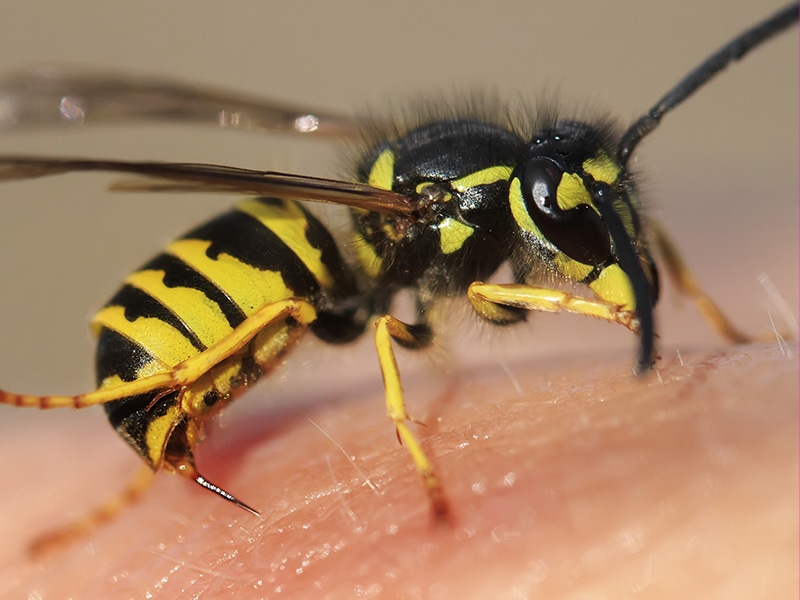
Why Wasp Activity Increases Over Summer
Many social wasp colonies begin with a queen establishing a nest earlier in the year. As new workers emerge, they gather food, care for the developing young, and help expand the nest.
That means a nest that was small and easy to overlook in spring can hold many more wasps by midsummer. As the colony grows, more workers leave the nest to search for food and building materials, making activity around the property much easier to notice.
Wasp activity can continue increasing into late summer and early fall, when established colonies are often at their largest. Around Jacksonville homes, that may mean more wasps near rooflines, flowering plants, garbage containers, outdoor dining areas, and protected nesting sites.
Common Wasps Around Jacksonville Homes
Paper Wasps
Paper wasps are a common sight around Jacksonville homes during the warmer months. They have slender bodies, narrow waists, and long legs that often hang beneath them while they fly.
Their nests are usually easier to recognize than the wasps themselves. Paper wasps build open, umbrella-shaped nests with visible cells. These nests are commonly attached beneath:
-
Roof eaves
-
Porch ceilings
-
Deck railings
-
Window ledges
-
Outdoor furniture
-
Play equipment
They may also build inside shrubs or clumps of ornamental grass. These hidden nests can be accidentally disturbed while homeowners prune plants or work in the yard.
Paper wasps are generally less defensive while away from the nest, but they may sting when someone gets too close or bumps the surface supporting it.
Yellow Jackets
Yellow jackets are compact social wasps with bold black-and-yellow markings. They are often mistaken for bees, but yellow jackets have smoother bodies and clearly defined waists.
In Florida, yellow jackets commonly build nests in underground cavities. Homeowners may first notice several wasps flying low over the yard and repeatedly entering the same small opening. Nests may also be established in protected voids around structures.
Common warning signs include activity near:
-
Holes in the lawn
-
Tree roots
-
Landscape timbers
-
Openings beneath steps
-
Sheds or outbuildings
-
Gaps around the exterior of a home
Underground nests are often discovered while mowing, trimming, digging, or walking across the yard. Yellow jackets can strongly defend their colony, and each wasp can sting more than once.
Do not cover the entrance, dig into the nest, or pour anything into the opening. These attempts can agitate the colony without resolving the problem.
Bald-Faced Hornets
Despite their name, bald-faced hornets are actually a type of yellow jacket. Their mostly black bodies and white facial markings make them easier to distinguish from the yellow-and-black wasps commonly found around Jacksonville homes.
Bald-faced hornets build enclosed paper nests above ground. These gray, rounded nests may grow to a foot or more in diameter and can be attached to:
-
Tree branches
-
Tall shrubs
-
Roof overhangs
-
Utility structures
-
Other elevated locations
UF/IFAS describes bald-faced hornets as aerial-nesting social wasps that can aggressively defend their colonies when threatened.
Do not shake the branch supporting the nest, attempt to knock it down, or approach it from a ladder. A nest near a home, walkway, play area, or other frequently used space should be handled professionally.
Mud Daubers
Mud daubers are solitary wasps with long, slender bodies and especially narrow waists. Depending on the species, they may appear black, metallic blue, or black and yellow.
Rather than living in a large colony, a female mud dauber builds individual mud chambers for her young. These nests may look like narrow tubes, rows of cells, or irregular clumps of dried mud.
They are often found on:
-
Porch ceilings
-
Garage walls
-
Exterior siding
-
Sheds
-
Carports
-
Other covered surfaces
Mud daubers hunt spiders, which they place inside the chambers as food for their developing young. UF/IFAS describes the black-and-yellow mud dauber as a docile solitary wasp that rarely stings unless handled roughly.
Although their nests can be unsightly, mud daubers do not defend them like paper wasps or yellow jackets defend their colonies.
Cicada Killer Wasps
Cicada killers are among the largest wasps found in Florida. Their size and black-and-yellow markings can make them alarming, but they behave differently from yellow jackets.
Female cicada killers dig burrows in exposed soil and carry captured cicadas into underground chambers for their young. Their nesting areas may be found near:
-
Driveways
-
Sidewalks
-
Patios
-
Garden beds
-
Retaining walls
-
Bare or thin areas of lawn
According to the University of Florida, cicada killers can reach approximately 1½ inches long. Males may act territorially and fly toward people passing near a nesting area, but they cannot sting. Females can sting, although they usually do so only when handled or threatened.
Several burrows near a walkway, patio, or play area can still make it difficult to use the space comfortably.
What Can the Wasp Nest Tell You?
You do not need to get close enough to study a wasp’s markings. The shape and location of the nest often provide a more useful clue.
-
An open paper nest beneath an eave may belong to paper wasps.
-
Several wasps entering a ground opening could indicate a yellow jacket nest.
-
A large, enclosed gray nest in a tree may contain bald-faced hornets.
-
Dried mud tubes on a wall are usually made by mud daubers.
-
A large wasp hovering over a sandy burrow may be a cicada killer.
Watch the activity from a safe distance. Do not stand directly in the insects’ flight path or place your face or hands near a suspected entrance.
When wasps are entering a soffit, wall opening, attic vent, or another part of the structure, the visible opening may not be the nest’s actual location. Professional inspection is especially important in these situations.
Where Do Wasps Build Nests Around Homes?
Wasps usually choose places that provide some protection from rain, predators, and frequent disturbance.
Around a Jacksonville property, that can include roof overhangs, porch ceilings, shrubs, garages, sheds, fences, outdoor furniture, play equipment, wall voids, and underground cavities.
Use extra caution when:
-
Trimming dense shrubs or ornamental grasses
-
Moving patio furniture or storage containers
-
Opening a shed that is not used often
-
Cleaning around grills and playsets
-
Reaching beneath railings or roof overhangs
-
Mowing the lawn
-
Working near gaps or openings along the sides of the house
Repeated flights to and from one location often indicate a nearby nest, even when the nest itself is hidden.
How to Make Your Property Less Attractive to Wasps
You cannot prevent every wasp from entering your yard, but you can reduce some of the food and nesting opportunities around your home.
Keep outdoor garbage and recycling containers tightly closed. Clean up food, spilled drinks, and scraps after eating outside, remove fallen fruit, and avoid leaving pet food outdoors.
Check eaves, porch ceilings, sheds, outdoor furniture, and play equipment for early nest activity. If you find a nest or notice wasps repeatedly entering the same area, do not try to remove it yourself. Contact Lindsey Pest Services for help.
What Should You Do If You Find a Wasp Nest?
Keep people and pets away from the area and leave the nest alone.
Do not:
-
Hit or shake the nest
-
Spray it with a garden hose
-
Cover an underground entrance
-
Attempt to burn or drown it
-
Knock it down with a pole
-
Stand on a ladder while spraying it
Nest removal becomes especially dangerous when the colony is defensive, the nest is above your head, or the entrance leads underground or into part of the home.
Store-bought sprays may require you to stand close enough to be stung. They can also cause wasps to scatter without reaching a nest hidden inside a wall or underground cavity.
Professional help is especially important when someone in the household has a history of severe reactions to insect stings.
When Should You Call for Wasp Control?
An occasional wasp passing through the yard does not always require treatment. The bigger concern is when there is a nest or activity near a location your family regularly uses.
Consider calling Lindsey Pest Services for wasp control if:
-
A nest is close to a doorway, walkway, patio, pool, or play area
-
Wasps are entering a wall, soffit, vent, or other structural opening
-
The nest is underground or difficult to reach
-
Several wasps are defending the same area
-
You cannot tell what type of stinging insect is present
-
Someone in the household is highly sensitive to stings
Lindsey Pest Services can inspect the activity, identify the wasp when possible, locate the nesting area, and determine the appropriate way to address it.
Get Year-Round Protection From Wasps and Other Pests
An active wasp nest may be the problem you notice today, but it may not be the only pest pressure around your Jacksonville home.
Lindsey’s Best Pest Control Plan includes quarterly pest service and protection from more than 30 common pests. The plan also includes web removal up to 12 feet, wasp removal up to 10 feet, rodent control and trapping, seasonal mosquito suppression, and fire ant control up to 20 feet from the foundation.
This residential pest control plan is backed by the Lindsey Pest Free Guarantee. If covered pest activity returns between scheduled visits, we will return to address it at no additional charge.
For help with an active wasp nest or broader year-round pest protection, contact Lindsey Pest Services today to learn more about the Best Pest Control Plan.
Frequently Asked Questions
Will wasps reuse the same nest next year?
Most social wasps do not reuse an old nest. However, new queens may build nearby if the area still offers good shelter.
Why are wasps attracted to pools?
Wasps may visit pools for water, particularly during hot, dry weather. Food, sweet drinks, and flowering plants around the pool can also attract them.
Can a wasp sting through clothing?
A wasp can sting through thin or loose-fitting clothing if it becomes trapped or pressed against the skin. Thicker clothing offers more protection but does not eliminate the risk.
Originally published July 23, 2025. Updated with new information on Jacksonville wasps and summer activity.