
Why Are Ants Suddenly All Over My Kitchen?
Apr 8, 2026
If ants have suddenly appeared in your kitchen—on your counters, around your sink, or inside your pantry—you’re not alone.
We’ve been helping Jacksonville homeowners deal with ant problems since 1957—and we hear this all the time across Northeast Florida.
One day, nothing. The next day? A full trail.
That’s because ants don’t randomly wander inside. Once they find food or water, they go back and bring the rest with them.
And in our warm, humid climate, they don’t slow down much.
What starts as a few ants can turn into a steady stream fast.
Quick Answer: Why Ants Are in Your Kitchen
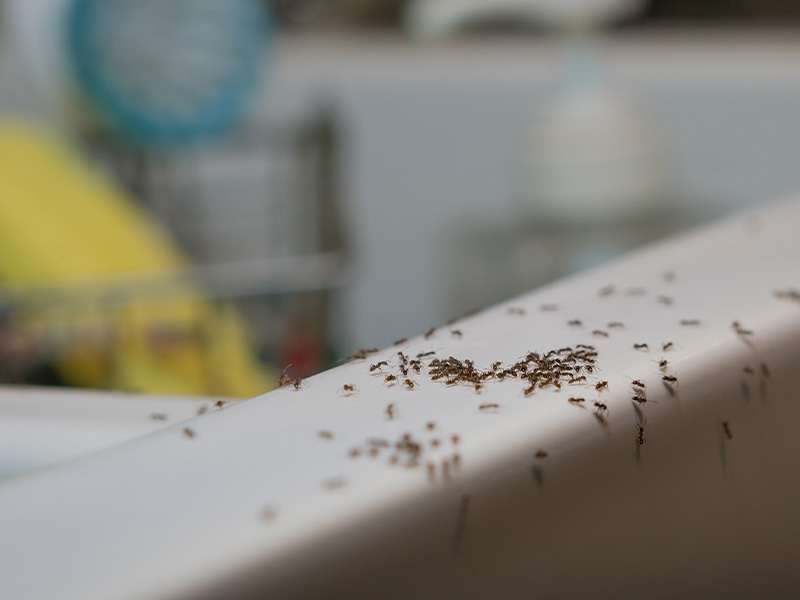
Ants show up in kitchens because they’re searching for three things: food, water, and shelter. Even tiny crumbs under the air fryer, moisture under your sink, or a small crack near a window can attract them.
Once one ant finds it, it leaves a scent trail. Other ants follow that same path.
That’s why it suddenly feels like they’re everywhere.
Why Ants Suddenly Show Up Overnight
It always feels sudden—but there’s usually a reason.
Sometimes it starts outside. After heavy rain, ant nests can get disturbed, which pushes ants indoors looking for food and water.
Other times, the trigger is inside your home. Fruit ripening on the counter, trash sitting too long, pet food left out overnight, or even a small missed spill can all attract ants.
Once they find a reliable source, they don’t just visit—they recruit.
Where Ants Hide in Your Kitchen (Check These First)
Ants are rarely just “on the counter.” They’re coming from somewhere close.
When we inspect kitchens in Jacksonville homes, these are the spots we check first:
-
Behind and under the refrigerator
-
Inside cabinets (especially near sugar or snacks)
-
Around sink plumbing
-
Inside pantry shelves
-
Behind backsplashes or inside walls
-
Around trash cans
-
Near the dishwasher
If you’re seeing ants in more than one area, there’s a good chance they’re nesting nearby—or inside the walls.
Why Your Kitchen Is Such a Target for Ants
If it feels like ants are obsessed with your kitchen… it’s because they are.
From an ant’s perspective, your kitchen has everything they need—food, water, and easy access. And once they find it, they don’t leave.
In most Jacksonville homes we visit, the problem starts with something small. A little sugar near the coffee maker, a sticky spill, or even pet food left out overnight is often enough to attract the first ants.
Water is just as important. We regularly find ants gathering around sinks, damp cabinets, and even condensation under appliances. If there’s moisture, they’ll find it.
Getting inside isn’t difficult either. Ants can slip through tiny gaps around windows, doors, or utility lines—openings most homeowners don’t even notice.
And once ants are inside, they don’t wander far.
They go straight to the most reliable source of food and water—which, in most homes, is the kitchen.
That’s especially true after heavy rain in Northeast Florida. When outdoor nests get disturbed, ants move indoors to regroup—and the kitchen is usually where they end up.
In many cases, the colony itself is close by.
We often find nests in mulch beds, under patios, or along the foundation. The ants you’re seeing are just workers traveling back and forth between that nest and your kitchen.
Why Ant Trails Keep Coming Back
Ants aren’t wandering randomly—they’re following scent trails.
When one ant finds food, it leaves a trail for others. Every ant that follows strengthens that path.
That’s why they keep showing up in the exact same spot.
Wiping the surface doesn’t solve the problem.
Common Ant Species Found in Jacksonville Kitchens
Different ants behave differently, which affects how they should be treated. While this isn’t a full identification guide, these are a few of the most common species homeowners encounter in their kitchens:
-
Odorous House Ants
Tiny ants attracted to sweets and grease; they are often found trailing along counters and sinks. -
Pharaoh Ants
Another tiny ant species, they are hard to control because colonies often split into several new colonies. -
Argentine Ants
Small ants that form large colonies and heavy trails; strongly attracted to sweets and moisture. -
Carpenter Ants
Larger ants that may indicate moisture issues or nearby wood damage if they’re nesting inside or near your home. -
Pavement Ants
Small ants that typically enter from cracks in foundations or slabs and form visible trails into kitchens.
For a full breakdown of ant species and how to identify them, check out our Ant Identification Guide.
What Most Homeowners Get Wrong About Kitchen Ants
You clean. You spray. The ants disappear… and then show right back up. This is one of the biggest frustrations homeowners run into.
Here’s why.
Most store-bought treatments only kill the ants you can see—not the colony behind them.
And that colony is the real problem.
In fact, some DIY approaches can actually make things worse by:
-
breaking up the colony instead of eliminating it
-
pushing ants deeper into walls or cabinets
-
causing the colony to split into multiple nests
That’s why the problem seems to “restart” over and over again.
At a certain point, this stops being a cleaning issue and becomes a colony problem.
What Actually Helps Discourage Ants (and What Doesn’t)
A lot of homeowners assume they just need to clean more—and while that helps, it’s only part of the picture.
These steps can make your kitchen less attractive to ants, but they won’t eliminate a colony once it’s established.
Here’s what’s worth doing:
-
Wipe down counters regularly, especially around food prep areas
-
Avoid leaving fruit, crumbs, or pet food out overnight
-
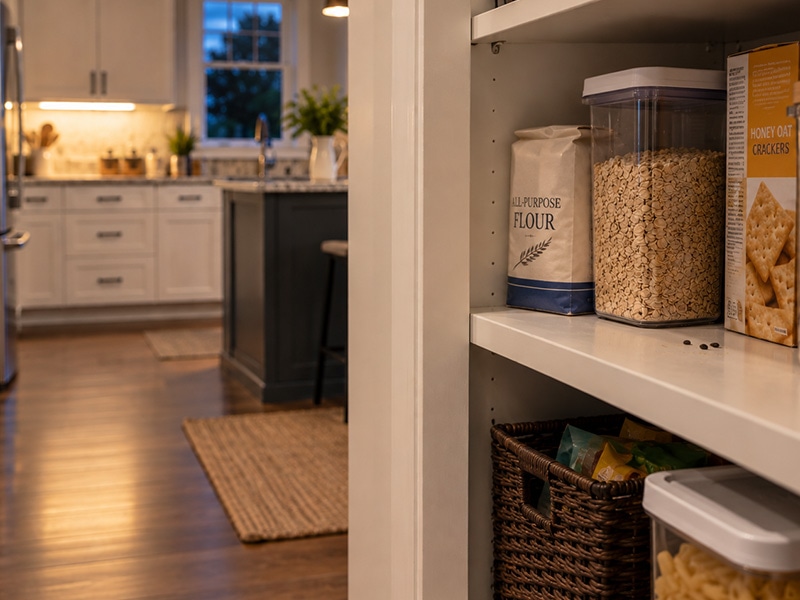
Store sugar, snacks, and pantry items in sealed containers
-
Take out trash and recycling before it builds up
-
Fix leaks or moisture issues as soon as you notice them
-
Clean under and behind appliances where crumbs collect
Even when you stay on top of these things, ants can still show up—especially if there’s a colony nearby.
That’s usually the sign that the problem is bigger than just what’s on the surface.
When It’s Time to Call a Professional
It’s time to contact Lindsey Pest Services if you’re seeing:
-
Ants returning after cleaning
-
Multiple trails forming
-
Activity inside walls or cabinets
Our local pest control team is here to help, even if you’ve just started noticing ants and don’t want to wait for the problem to grow.
Why Jacksonville and First Coast Homeowners Trust Lindsey Pest Services
We’ve been handling ant problems in Jacksonville and First Coast homes for years. We know how persistent they are—and where they hide.
More importantly, we don’t just treat visible ants—we target the source.
With our residential pest control service, you get:
-
Thorough inspections to locate nests and entry points
-
Targeted treatments that eliminate colonies
-
Ongoing protection to keep ants from returning
Our ongoing pest control plans keep kitchens protected year-round—so homeowners don’t have to deal with this again.
Why are ants coming from behind my backsplash or outlets?
That’s often a sign they’re traveling through wall voids.
Ants commonly move behind backsplashes, electrical outlets, and under cabinets because those areas give them protected pathways between the nest and your kitchen.
Do ants in my kitchen mean there’s a nest inside my house?
Not always—but it’s possible.
Many infestations start outside, with ants coming in to forage. But if you’re seeing consistent activity in the same areas, there’s a higher chance the colony is very close—or already inside.
Can kitchen ants spread to other parts of my home?
Yes—and they often do.
If the colony grows or the food source changes, ants may expand into bathrooms, laundry rooms, or other areas with moisture or food access.
Can I still eat my food if there are ants on it?
It’s best not to.
Even though most ants aren’t dangerous, they travel through places like trash areas, wall voids, and outdoor surfaces before getting into your food. That means they can carry bacteria onto anything they touch.
If ants were on or inside food—especially unsealed items—it’s safest to throw it away.
Get Your Kitchen Back To Normal
Ants don’t belong where your family cooks and eats.
If you’re seeing ants in your kitchen, they’re not going to go away.
Contact Lindsey Pest Services and see why homeowners across Greater Jacksonville and along the First Coast have trusted our team since 1957.
If you’re ready to stop dealing with these kitchen pests, we’re here to help.
This blog post was originally published on August 18, 2025; it has been updated with new information.