
How Dangerous Are Cockroaches in My Jacksonville Home?
Most people know cockroaches are gross. But when you find roaches in your Jacksonville home, the real question is whether they're just unpleasant to look at or actually dangerous to live with.
The short answer: cockroaches are one of the most unsanitary pests that can get into your home. It's not just that they look bad — it's where they've been before they show up on your kitchen counter. Cockroaches spend their time in some of the dirtiest places around your home and neighborhood, and they carry what they pick up there directly into your living space.
Here's how that contamination works — and why it matters more than most homeowners realize.
Cockroaches Seek Out the Most Contaminated Food Sources
Cockroaches don't eat the way most pests do. Given a choice, cockroaches are more likely to choose rotting fruit, food residue, and decaying organic matter over fresh food. That includes the material that collects at the bottom of trash cans, around drains, and inside compost piles.
They don't just eat this material. They may reproduce near it, too.
When a cockroach feeds on decaying material, it can pick up bacteria, parasitic worms, and other harmful organisms on its body and legs. That's the first link in the contamination chain — and it starts long before the roach ever enters your home.
They Feed on Animal Waste — Then Walk Through Your Home
One of the most overlooked ways cockroaches pick up pathogens is through animal waste. Dog droppings in the yard, a cat's litter box in the laundry room — cockroaches will feed on both.
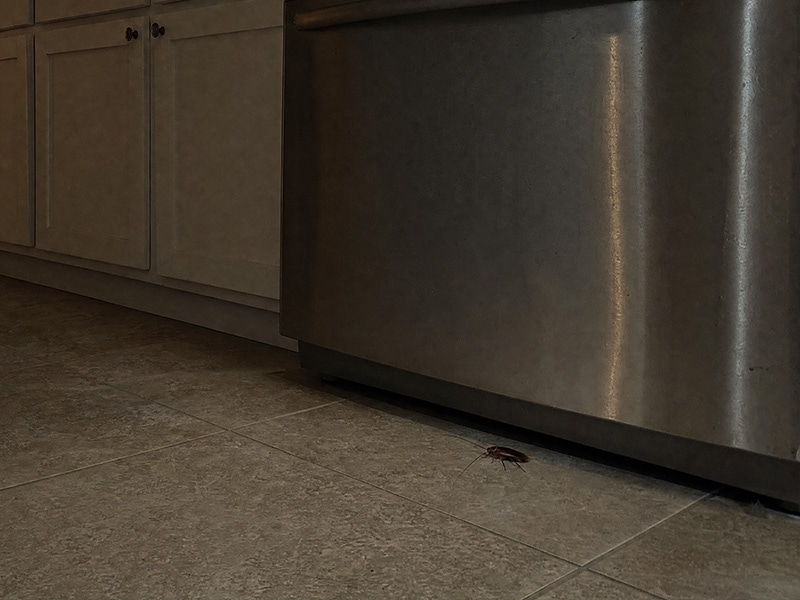
This is especially relevant in Greater Jacksonville and the First Coast, where warm temperatures keep cockroaches active outdoors year-round. A roach can feed on pet waste in the yard, find a gap around a pipe or door frame, and be walking across your kitchen floor the same night.
Where Cockroaches Have Been Before They Reach Your Home
Before a cockroach shows up on your kitchen floor, there’s no telling what it has already crawled through. Storm drains, sewer lines, dumpsters, mulch beds, and dead animals in the yard can all expose cockroaches to bacteria and other contaminants.
Once inside, they keep moving through tight, enclosed spaces behind appliances, inside wall voids, and along plumbing lines. That creates a contamination path from outside your home to the surfaces you use every day.
How Cockroaches Spread Bacteria Across Your Home
Once a cockroach has picked up harmful organisms — from decaying food, animal waste, or grimy hiding spots — spreading them around your home is easy.
Cockroaches can climb walls, run across ceilings, and squeeze through gaps narrower than half their body height. Some species fly. A cockroach that spent the evening behind your oven can be on your kitchen counter, inside your pantry, and across your bathroom sink all in the same night.
That mobility is what makes cockroach contamination so hard to contain. It doesn't stay in one room or on one surface.
Where Cockroach Contamination Shows Up in Your Home
This is where it gets personal. Some of the places cockroaches leave bacteria may surprise you:
-
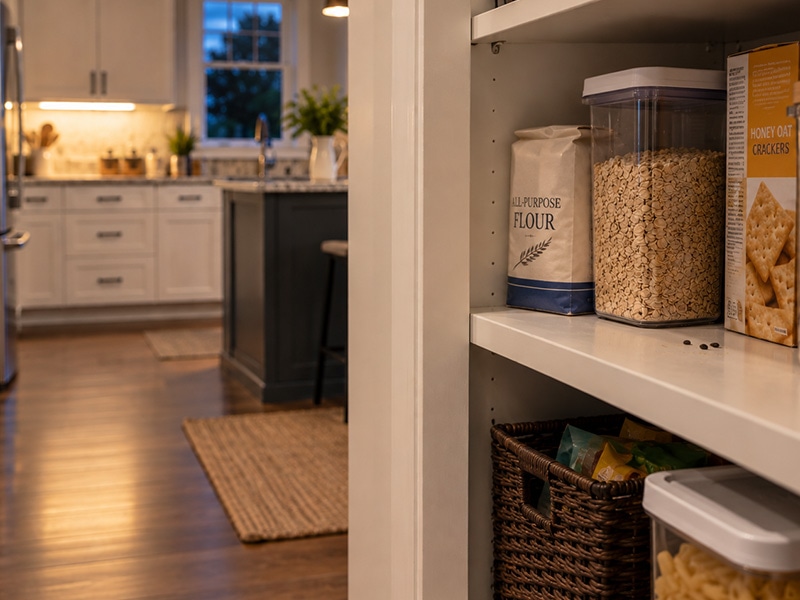
Your food. Cockroaches chew through cardboard, paper, and thin plastic packaging. They don't need an open container — they'll make their own way in.
-
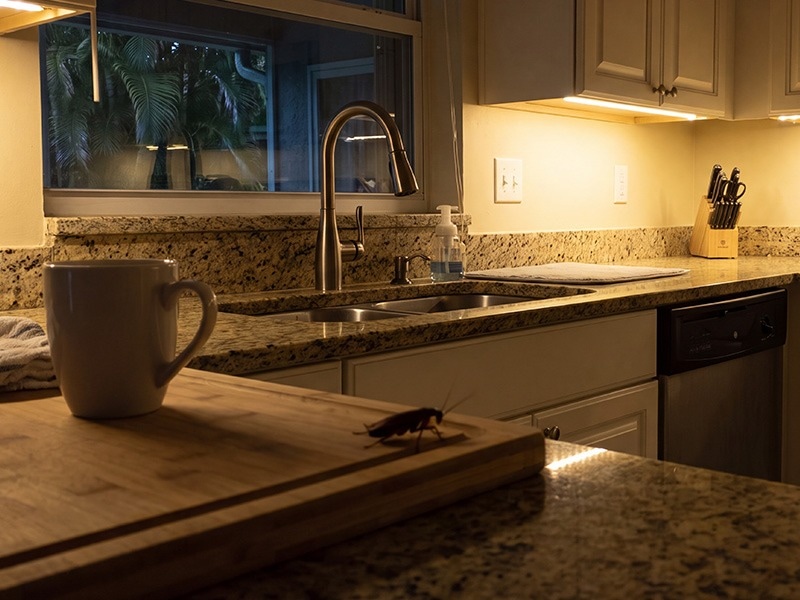
Cutting boards and countertops. When a cockroach runs across a food-prep surface, it leaves organisms behind that are invisible to the naked eye. You won't know the surface has been contaminated.
-
Dishes and silverware. Even inside closed cabinets, cockroaches can get through tiny gaps — especially nymphs. Newly hatched German cockroaches are small enough to fit through the openings around an electrical outlet.
-
Toothbrushes. Cockroaches eat toothpaste and are drawn to the residue in toothbrush bristles. If roaches are active in your bathroom, your toothbrush is a likely contact point.
Every one of these surfaces is something you or your family touches, eats from, or puts in your mouth — often without any idea a cockroach has been there.
What Diseases Can Cockroaches Spread?
Research has found that cockroaches can carry more than 33 types of bacteria, including E. coli and Salmonella, along with multiple human pathogens and parasitic worms. They're also linked to increased asthma symptoms and allergic reactions, particularly in children.
You can learn more about the health risks cockroaches pose here.
The key thing to understand is that cockroaches don't have to bite you or come into direct contact with your food to cause illness. The contamination happens through the surfaces they walk across — which is why an active infestation is more dangerous than most people realize.
Not Sure What You're Seeing?
Several cockroach species are active across Greater Jacksonville and the First Coast, as well as nearby communities like Flagler Beach and Palm Coast, and they don’t all look the same.
If you're spotting roaches but aren't sure what kind, this cockroach identification guide covers the five most common species in our region with descriptions and photos.
Protect Your Home From Cockroaches
If you're seeing cockroaches in your home, the contamination risk increases every day the problem continues. The longer roaches have access to your kitchen, bathroom, and living spaces, the more surfaces they contaminate.
Lindsey Pest Services helps homeowners address cockroach infestations, reduce contamination risks, and keep their homes protected year-round. Our residential pest control plans cover cockroaches and 30+ other common pests and include quarterly pest treatments.
Request your free quote to get started. Same-day service may be available, depending on technician availability.
Better Pest Control Plan "Our Most Popular Plan!"
Lindsey's Better plan protects your home and family from over 30 general pests plus rodents. This residential pest control plan includes an initial interior and exterior inspection and treatment for your existing pest problem. After the initial service, an experienced technician will return every quarter to perform an exterior treatment to keep insects and rodents out.
-
Quarterly Pest Service
-
Lindsey Pest Free Guarantee
-
30+ Common Pests
-
Webbing Removal (Up to 12 ft)
-
Wasp Removal (Up to 10 ft)
-
Rodent Control
-
Seasonal Mosquito Suppression
-
Fire Ant Control
-
Scorpion & Other Stinging Insect Control
Pests Covered In This Program:
German Cockroaches, American Cockroaches, Brown Banded Cockroaches, Australian Cockroaches, Asian Cockroaches, Woods Roaches, Carpenter Ants, Pharaoh Ants, Rover Ants, Ghost Ants, Thief Ants, Monomorium Ants, Acrobat Ants, Big-Headed Ants, Odorous House Ants, Pavement Ants, Little Black Ants, Silverfish, Fire Brats, Springtails, Psocids, Polistes Wasps, Crickets, Earwigs, Cellar Spiders, Jumping Spiders, Weevils, Cigarette Beetles, Drugstore Beetles, Confused Flour Beetles, and Fungus Gnats PLUS Rodents
Additional Details
* New customers only - after initial fee. Some exclusions may apply.
* One year service agreement required
* Early cancellation fee may apply