
Where Do Cockroaches Hide in the Kitchen?
Oct 6, 2026
You walk into the kitchen, turn on the light, and see a cockroach disappear under an appliance or cabinet. Now the obvious question is: where did it go?
Cockroaches are good at squeezing into narrow spaces, and kitchens give them plenty of options. They may hide behind appliances, under sinks, inside cabinet gaps, around plumbing openings, and in other areas close to food, water, and warmth.
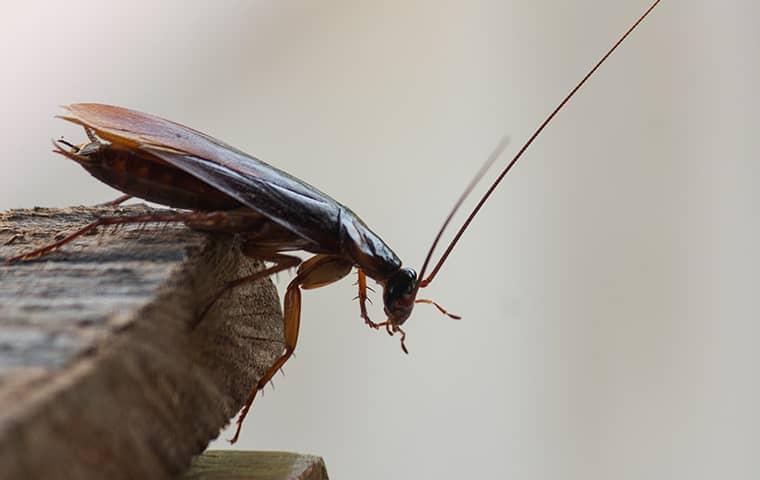
The type of cockroach matters, too. Small German cockroaches are especially likely to live and reproduce inside kitchens, while some of the larger cockroaches found around Northeast Florida homes may have wandered in from outside.
Here’s where to look and what a kitchen roach sighting could mean.
Where Cockroaches Hide in the Kitchen
Cockroaches tend to stay out of sight during the day, settling into tight spaces where they feel protected. In the kitchen, some of their most common hiding places include:
Behind and Under the Refrigerator
Refrigerators can provide cockroaches with warmth, moisture, food debris, and hiding spaces that are rarely disturbed.
German cockroaches may hide around the compressor and motor compartment, condenser components, wiring, and other protected spaces underneath or behind the appliance. The condensation or defrost drip pan can also provide moisture, collecting defrost water before it evaporates.
Roaches may also be found around defrost drain tubing, water-line connections for ice makers or dispensers, and gaps where wires or tubing enter the appliance. Food crumbs, grease, and other debris that accumulate beneath the refrigerator can give them an additional reason to stay close.
On refrigerators with a lower grille or kick plate, cockroaches can slip behind it and move into the warmer mechanical area, where they are less likely to be disturbed.
Around the Stove and Oven
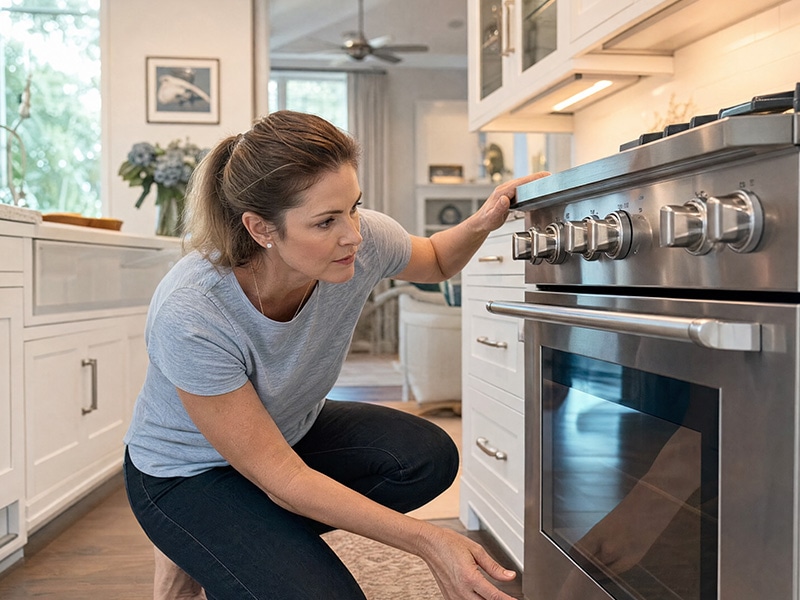
Grease, crumbs, warmth, and narrow gaps make the stove and oven particularly attractive hiding areas. Cockroaches can squeeze between the appliance and surrounding cabinets or countertops, underneath the unit, and into protected spaces behind it.
Small cockroaches, especially German cockroaches, can even get behind an oven’s electronic display or control panel. The narrow space around the controls provides warmth and shelter, and openings used for wiring or ventilation can give them a way inside the housing.
That’s why a homeowner may occasionally see a cockroach or signs of activity behind the display without seeing anything inside the oven itself.
Under and Around the Dishwasher
Dishwashers can offer cockroaches several things they look for in one small area: warmth, moisture, food residue, and protected hiding spaces.
German cockroaches may hide behind the lower kick plate or around the motor housing, insulation, wiring, and other components underneath or behind the appliance. These areas stay dark and are rarely disturbed.
The dishwasher itself can also provide food and moisture. Grease and small food particles may collect around the filter at the bottom of the machine, while moisture can linger around the door gasket and seals after a cycle. Roaches may forage around these areas when the dishwasher is idle before returning to more protected spaces beneath or behind the appliance.
Around Small Countertop Appliances
Cockroaches can also hide around countertop appliances, especially those that provide warmth and collect food residue. Microwaves, toasters, coffee makers, and air fryers can all offer narrow gaps, electrical components, crumbs, grease, or moisture that make the surrounding area attractive.
Under the Kitchen Sink
The cabinet beneath the sink can be especially attractive to cockroaches because it combines darkness, moisture, and several hidden travel routes.
Roaches may hide around the P-trap and drain assembly, near water shutoff valves, behind a garbage disposal, or around dishwasher hoses and other plumbing connections. Gaps where supply and drain lines pass through the back or bottom of the cabinet can also give them access to wall voids and neighboring cabinets.
Even a small plumbing leak, condensation on a pipe, or damp cabinet floor can provide moisture. If trash, recycling, paper bags, or cleaning supplies are stored under the sink, these items can create even more sheltered areas near potential food residue.
Inside Cabinets and Drawers
Cockroaches do not need much room to hide inside kitchen cabinetry. They can slip into cabinet joints, rear corners, drawer slides, the undersides of drawers, gaps around hinges, and other narrow spaces that are rarely disturbed.
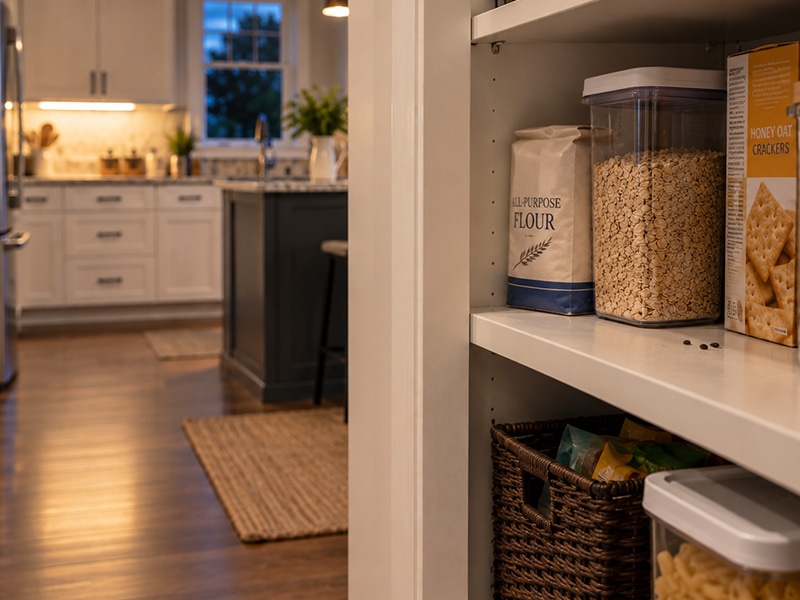
In pantries and food-storage cabinets, crumbs, grease, spilled dry goods, and damaged packaging can give them a reason to stay nearby. German cockroaches may also settle into small cracks at the backs of cabinets or around hardware where they remain out of sight during the day.
Along Cabinet Toe Kicks and Wall Gaps
The recessed space beneath lower cabinets is easy to overlook, but it can provide cockroaches with a long, dark hiding area close to food and water.
Roaches may move behind removable toe kicks, into hollow spaces beneath cabinet bases, or through gaps where cabinets meet the wall or floor. Similar concealed areas can exist beneath kitchen islands and along baseboards, giving cockroaches places to move between different parts of the kitchen without crossing open areas.
Why Cockroaches Are Drawn to Kitchens
A kitchen can provide nearly everything a cockroach needs within a relatively small area.
Food residue may collect beneath appliances or inside cabinets. Water can come from sinks, plumbing, pet bowls, condensation, or small leaks. Appliances and enclosed cabinetry provide warmth and protected hiding places.
That does not mean a dirty kitchen is required for cockroaches to show up. Even a well-kept kitchen can provide enough food and moisture to support activity, particularly when cockroaches have already made their way inside.
Why Did I Find a Cockroach in My Sink?
Finding a cockroach in the kitchen sink often leads homeowners to assume it came directly up the drain, but that is not always what happened.
Cockroaches may be attracted to moisture around the sink and can move through gaps around plumbing penetrations beneath it. A roach found in the sink may simply have been foraging nearby or moving through one of these hidden areas, so finding one there does not necessarily mean it came up through the drain.
If you repeatedly find cockroaches around the sink, underneath it, or near nearby cabinets, there may be activity in the surrounding plumbing voids or other hidden areas.
Which Cockroaches Are Most Likely to Be in the Kitchen?
The species matters because not every cockroach found in a kitchen is actually living there. German cockroaches are especially likely to establish themselves indoors and often hide around appliances, cabinets, sinks, and other warm, humid areas close to food.
Larger species, such as American cockroaches, can also show up in kitchens, but they may have wandered in from outdoors or another part of the structure rather than breeding in the kitchen itself.
No matter which species you’re seeing, cockroaches in the kitchen should be addressed promptly.
Why Do Cockroaches Come Out at Night?
Typically, cockroaches are more active after dark, which is why homeowners often spot one after turning on a kitchen light late at night.
During the day, they usually remain in hiding spots near where they feed and find moisture.
A daytime sighting can happen for several reasons and does not, by itself, tell you how many cockroaches are present. What matters more is the species, how often you're seeing them, and whether there are other signs of activity.
What Should You Do If You’ve Noticed Cockroaches in the Kitchen?
Don’t ignore cockroach activity in the kitchen. Even if you’ve only seen one, it’s worth having the situation evaluated rather than waiting to see if more appear.
A professional pest control technician can help determine whether the sighting was isolated or part of a larger problem and recommend the right next step.
Get Help With Cockroaches in Your Northeast Florida Home
Lindsey Pest Services has been helping Northeast Florida homeowners deal with cockroaches and other household pests since 1957. Our home pest control services include cockroach coverage across all residential plans, along with ongoing protection from other common household pests.
We serve homeowners throughout Greater Jacksonville and the First Coast, including Jacksonville, Orange Park, and Neptune Beach. Lindsey has also recently expanded its service area into parts of Flagler County, including Palm Coast and Flagler Beach.
If cockroaches are showing up in your kitchen, contact Lindsey Pest Services to get started.
Originally published March 22, 2024. Updated October 6, 2026, with additional information for homeowners.