
Why Millipedes Invade Northeast Florida Homes Every Summer
Jun 22, 2026
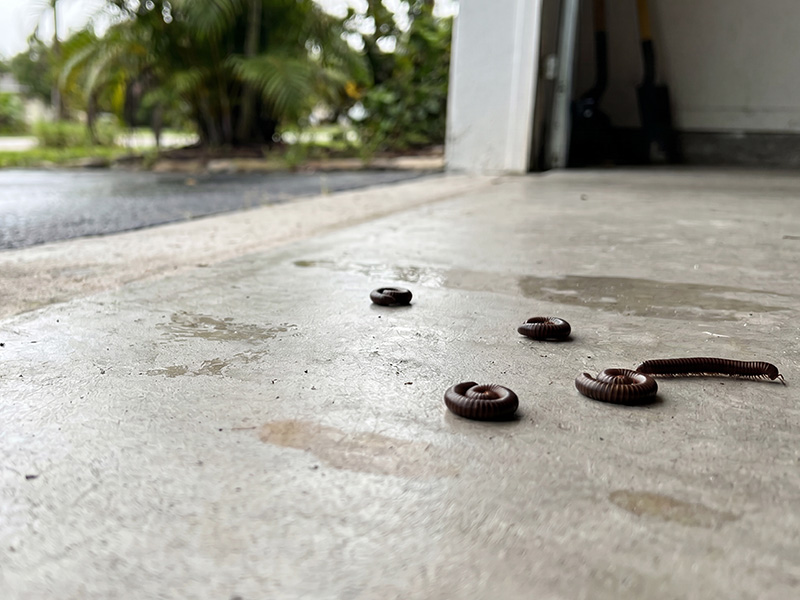
You step into your garage one morning and stop short. There are millipedes everywhere — along the baseboards, curled up in corners, crawling across the concrete. Not one or two. Dozens.
If you live anywhere in Northeast Florida, this probably isn't the first time it's happened. At Lindsey Pest Services, millipede invasions are among the most common summer calls we receive from homeowners across Greater Jacksonville, the First Coast, and communities like Palm Coast, Flagler Beach, and Bunnell. They show up suddenly, in huge numbers, and seem to come out of nowhere.
But they don't come out of nowhere. There's a very specific reason millipedes flood into homes every summer in this part of Florida — and understanding it is the first step toward keeping them out.
So, Why Are There So Many Millipedes in Your Garage?
Millipedes invade Northeast Florida homes in summer because extreme heat dries out the soil, then heavy afternoon storms flood the damp areas where they live. As a result, they move toward foundations, garages, crawl spaces, and other moist areas around the home. Once they find small gaps around doors, siding, pipes, or foundation cracks, they can slip inside by the dozens.
Summer Weather Creates the Perfect Conditions for Millipede Invasions
Millipedes live in the soil, mulch, leaf litter, and debris around your home. They need moisture to survive, so they stay tucked into damp ground during most of the year. You'd never know they were there.
Then summer arrives, and the pattern that drives them indoors starts repeating.
Stretches of intense heat dry out the top layer of soil, pulling moisture away from the areas millipedes depend on. That pushes them to move — and the nearest reliable source of moisture is usually your home's foundation, garage slab, or crawl space.
Then the afternoon storms roll in. Heavy downpours saturate the ground, flood their hiding spots, and force them out in waves. Homeowners across Jacksonville, St. Augustine, Palm Coast, and everywhere in between start finding them by the handful — sometimes by the hundred.
It's this back-and-forth of extreme heat followed by drenching rain that triggers the mass movement. One or the other might not be enough. But the combination sends millipedes searching for shelter, and your home is exactly where they end up.
If millipedes are already showing up inside, Lindsey Pest Services can help reduce the activity outside your home before the next wave moves in.
Where Millipedes Are Getting Into Your Home
Millipedes don't need much space. They squeeze through small cracks in the foundation, gaps around utility pipes, worn garage door seals, and openings where siding meets concrete. If there's a gap wide enough for a pencil tip, a millipede can get through it.
What makes it easier for them is what's right outside those entry points. Thick mulch beds pushed up against the foundation provide millipedes with a damp, protected place to gather, just inches from your exterior walls. Leaf litter, dense ground cover, and stacked firewood do the same thing — they hold moisture close to the house and give millipedes a place to build up before heading inside.
Across rapidly growing communities like Nocatee and St. Johns, heavy landscaping around new construction is common. Fresh mulch beds, irrigation-soaked soil, and retention ponds nearby create exactly the kind of environment millipede populations thrive in. In older neighborhoods throughout Jacksonville and St. Augustine, settling foundations and aging weather seals open up entry points that weren't there when the home was built.
Down in Palm Coast, the miles of canals running through the community keep the surrounding soil consistently damp, which supports higher millipede populations even between storms. Homeowners in Flagler Beach and Bunnell deal with similar conditions thanks to the coastal humidity and lower-lying ground that holds water longer after heavy rain.
Why Cleaning Them Up Doesn't Stop the Problem
When you find dozens of millipedes inside, the natural reaction is to sweep or vacuum them up. That handles what's in front of you, but it doesn't do anything about the population still living in the soil and mulch around your home's perimeter.
Millipedes don't send scouts. When conditions push them to move, they all move at once — and they follow the same moisture trails along your foundation to the same entry points. Removing the ones that got in without addressing the source just means another wave will come after the next rainstorm.
Over-the-counter sprays have the same limitation. They might knock down individual millipedes on contact, but they don't create a lasting barrier, and they don't reach the areas where millipedes are active around your yard and foundation.
The pattern repeats all summer unless something changes. Contact us to break the pest cycle in your home.
How Ongoing Pest Control Keeps Millipedes From Coming Back
Professional pest control focuses on the areas where millipedes live and travel before they reach your doors and windows. Treatments around the foundation help reduce activity outside and make it harder for millipedes to cross into your home.
Lindsey Pest Services covers millipedes under every residential pest control plan. Our quarterly service means your home's perimeter gets re-treated throughout the summer — right when millipede pressure is at its highest. That consistent coverage is what breaks the cycle of invasion after every storm.
Our local, woman-owned pest control company has been protecting homes across Northeast Florida for over 65 years. We understand how local conditions — the sandy soil along the coast, the heavier soil inland, the humidity, the afternoon storms — drive pest behavior in this part of the state. That experience shows up in how we treat, where we focus, and how we help homeowners stay ahead of pest problems all year long.
Frequently Asked Questions About Millipedes in Northeast Florida
Are millipedes dangerous?
No. Millipedes do not bite or sting, and they are not considered dangerous. However, they can release a defensive fluid when handled or crushed, so it is best not to touch them with bare hands.
Why do millipedes curl up?
Millipedes curl up to protect themselves. Since they cannot move quickly, rolling into a tight coil helps shield their softer underside.
Do millipedes mean my home is dirty?
No. Millipedes are usually a moisture issue, not a cleanliness issue. Even clean, well-kept homes can have millipede problems when the areas around the foundation stay damp.
How long do they live inside?
Usually, not long. Most indoor spaces are too dry for millipedes, which is why many are found curled up or dead along baseboards, garage walls, and bathroom floors.
Stop Millipedes Before the Next Summer Storm
You don’t have to keep sweeping up millipedes after every summer storm. Lindsey Pest Services can help reduce millipede activity around your home in Northeast Florida and keep them from moving inside. Request your free quote today.