
Ants In Your Bathroom Walls? Signs It’s A Nest (And What DIY Usually Misses)
Feb 10, 2026
If ants seem to be coming out of your bathroom wall (around trim, behind a mirror, near an outlet, or along the baseboard), you’re not imagining it.
In Jacksonville and across Northeast Florida, bathrooms are among the most common places we see recurring ant activity because they offer two things ants love: moisture and protected hiding places.
This article focuses specifically on the “ants in the walls” scenario—how to tell whether you’re seeing a simple trail or a sign of a nest, and what most DIY attempts miss.
If you want the broader overview first (why ants show up in bathrooms in the first place), start here: Ants In The Bathroom: Why It Happens And How To Get Rid Of Them.
Ants coming out of bathroom walls usually mean they’re using a hidden wall void as a protected pathway, attracted by moisture, or nesting nearby. In Northeast Florida homes, repeated wall activity often signals an established problem—not a random trail.
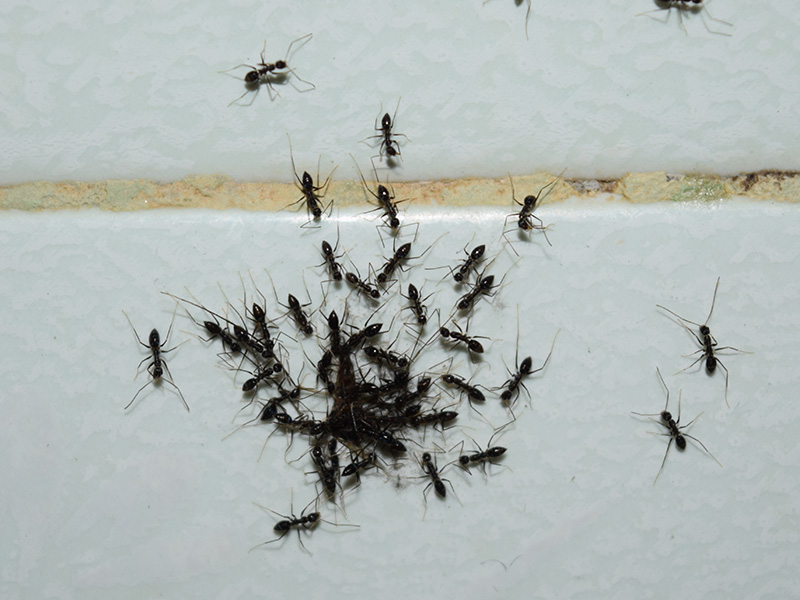
What It Usually Means When Ants Are in Your Bathroom Walls
Most of the time, one of these is happening:
- A Foraging Trail Is Running Through A Wall Void: Ants found a protected pathway (a crack, plumbing gap, or opening) and are traveling through the wall like a hidden hallway.
- Moisture Is Attracting Them To That Wall: Condensation, a slow plumbing leak, or damp materials create the conditions ants prefer.
- A Nest Is Nearby (Sometimes Inside The Structure): Some ants can nest in wall voids, behind baseboards, or in moisture-compromised wood.
University of Florida IFAS notes that indoor ant trails often enter through cracks, and ants may nest in walls, behind baseboards, or in rotting wood.
Signs It’s More Than “Just a Few Ants” (and Might Be a Nest)
Here are the patterns we pay attention to when a homeowner says, “They’re coming from the wall.”
You See Ants Even When the Bathroom is Dry
If you’re seeing ants when the sink and shower haven’t been used, it can mean:
- Ants aren’t just after fresh water
- The infestation is established
- The source is within a wall void or somewhere nearby
The Same Spot Reappears Every Day
A consistent “exit point” (same crack, same trim corner, same mirror edge, same baseboard seam) usually means the ants have a dependable pathway.
Activity Gets Worse At Night
Many ants are more active after dark. If you suddenly see more movement in the evening, it can help confirm the trail is established.
You Notice Winged Ants Indoors
Winged ants indoors can be a sign of a colony in or near the home.
For carpenter ants specifically, established colonies can produce winged ants seasonally, and that indoor activity can be associated with nesting in hollow areas of walls, ceilings, or floors, often connected to moisture issues.
You Find “Frass” Or Debris Near Trim/Baseboards
Carpenter ants don’t eat wood, but they can push out debris from their galleries (often described as coarse sawdust mixed with insect parts).
Signs like coarse sawdust emphasize the need to check areas where moisture has been a problem, including around plumbing or vent entrances.
You Smell Musty Odors Or See Water Stains
This is a big one in bathrooms.
Even if you can’t see an active leak, damp wall materials can signal a moisture issue.
What DIY Usually Misses (Why Sprays “Work”… Then Ants Come Back)
If you’re spraying ants you can see on the wall, you might get quick relief—but it often doesn’t solve the problem.
Here’s why.
DIY Mistake #1: Treating the Trail Instead of the Source
Targeting individual trails can be a quick fix, but it is often ineffective in the long term because it doesn’t significantly reduce the colony or affect the queen.
DIY Mistake #2: Skipping Moisture and Structural Entry Points
In bathrooms, ants commonly take advantage of:
- Gaps at trim and baseboards
- Tiny cracks along tile/grout lines
- Openings around vents, windows, and utility penetrations
- Wall voids connected to plumbing routes
(Notice we’re keeping this wall-focused on purpose—if your ants are concentrated around the sink basin/countertop area, that’s usually a different “symptom” with a different best-first fix.)
DIY Mistake #3: Using the Wrong Strategy For the Ant Type
Some ants respond better to baits, others to different approaches. Identification matters.
Use our Ant Identification Guide For Florida Homes to compare what you’re seeing.
Smart Steps You Can Take Right Away
These are the steps we typically recommend homeowners start with while we’re scheduling an inspection.
Step 1: Track The Ants For 10 Minutes (Seriously)
Pick a time when you’re seeing activity and watch where they:
- Appear
- Travel
- Disappear
A quick video on your phone helps.
Step 2: Dry Out the Bathroom
As a temporary measure:
- Run the fan during/after showers
- Wipe down moisture on walls/trim/baseboards
- Fix any drips you find
- Check the cabinet floor and wall area behind/around the vanity for dampness
Step 3: Don’t Seal Everything in a Panic
Sealing obvious gaps can help long-term, but if ants are actively trailing and you don’t know the source yet, sealing without a plan can make the activity pop up somewhere else.
If you can clearly see where they’re entering, take a photo and save it for your inspection.
Step 4: If You’re Seeing Winged Ants, Double-Check What You’re Looking At
If you’re seeing winged insects in the bathroom, it’s worth confirming whether they’re winged ants or something else.
You may find this helpful: Everything You Need To Know About Flying Ants In Your Florida Home.
When Ants Are Coming From a Wall, It’s Time To Call the Pros (Here’s Why)
If ants are coming out of your bathroom wall, even occasionally, that’s already past the “wait and see” stage.
Wall activity usually means:
- The trail is protected from DIY treatments
- The colony isn’t being affected
- Moisture or structural factors are involved
At this point, sprays and store-bought baits often just move the problem somewhere else.
We recommend calling if you see ants coming from a wall at all, and especially if:
- Activity shows up daily from the same area
- Ants appear even when the bathroom is dry
- You notice winged ants indoors
In Northeast Florida homes, waiting often allows colonies to spread deeper into wall voids or into nearby rooms.
Lindsey Pest Services, a local, woman-owned pest control company, works with the ant species common to Jacksonville and surrounding Northeast Florida communities, and we see this pattern often in local homes.
If you’re in our service area, learn more about our residential pest control plans or visit our Jacksonville Pest Control page.
If you’re ready to get eyes on the situation, here’s the fastest way to reach us: Request an Inspection.
Ants in Bathroom Walls: Common Questions Homeowners Ask
Can ants actually live inside bathroom walls?
Yes. Certain ants, especially carpenter ants—can nest in wall voids, behind baseboards, or in moisture-damaged materials near plumbing.
Do ants in the wall always mean there’s a leak?
Not always, but moisture is one of the most common contributors. Condensation, slow leaks, or damp wood can be enough to attract ants.
Why do ants keep coming back after I spray them?
Sprays only kill visible ants. They don’t reach the colony or queen inside the wall, so the trail re-establishes.
How are carpenter ants different from other ant species?
Carpenter ants can damage wood, while most other ants found in homes are nuisance pests that don’t affect the structure.
Could it be termites and not ants in my bathroom?
Yes. Winged ants and termites can look similar, and activity coming from a wall should be identified early to rule termites out.