
WDO Inspections: What Northeast Florida Home Buyers and Sellers Need to Know
May 27, 2026
If you're buying or selling a home in Greater Jacksonville, there's a good chance someone — your lender, your real estate agent, maybe both — has already mentioned a WDO inspection. And if you're like most people, your first question was probably, "What is that?"
At Lindsey Pest Services, we handle WDO inspections throughout Jacksonville, St. Augustine, Palm Coast, and other Northeast Florida communities regularly. We've been doing this since 1957, so we've seen just about everything when it comes to real estate transactions and the wood-destroying organisms that can complicate them. Here's what you need to know before your closing date.
What Is a WDO Inspection?
WDO stands for wood-destroying organisms. A WDO inspection is a visual inspection of a property to check for evidence of wood-destroying organisms and wood-decaying fungi. In Florida, most mortgage lenders require one before you can close on a home purchase or refinance.
This is separate from your standard home inspection. A general home inspector might note signs of wood damage, but only a licensed pest control company can perform the official WDO inspection and issue the report your lender needs.
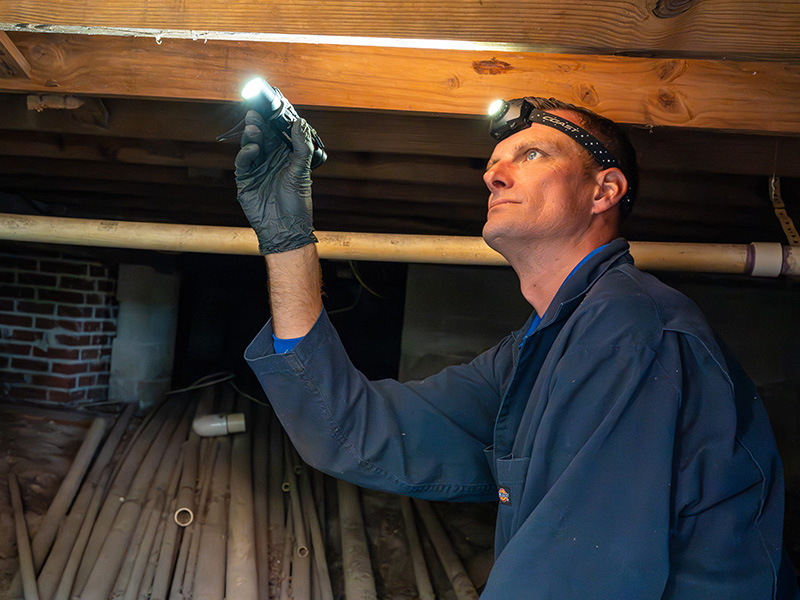
The inspector walks through the property looking for visible signs of wood-destroying organisms — such as mud tubes along the foundation, damaged or hollow-sounding wood, and evidence of wood decay or wood-decaying fungi. If it's visible and readily accessible, it gets checked.
What We're Looking for in Northeast Florida Homes
Our warm, humid climate and sandy soil create conditions that keep wood-destroying organisms active year-round. Here's what our inspectors are trained to look for.
Subterranean Termites
These are the ones we find most often. Subterranean termites build colonies underground and travel through mud tubes to reach the wood in your home. They can be active for years before anyone notices. In older Jacksonville neighborhoods — especially homes with lower crawlspaces near the St. Johns River — moisture in the soil makes conditions even more inviting for them.
If you've seen termite swarmers around your property, that's usually a sign that a mature colony is already established nearby.
Drywood Termites
Unlike subterranean termites, drywood termites don't need soil contact. They move right into the wood itself — window frames, door trim, attic framing. They're harder to detect because there's no mud tube to spot. What we typically find are small piles of frass that look like tiny wood-colored pellets near windowsills or baseboards.
Powder Post Beetles and Old House Borers
These wood-boring beetles leave behind small round exit holes and fine powdery dust near infested wood. They're less common than termites in Northeast Florida, but they do occasionally show up in older homes, exposed beams, or hardwood flooring.
Wood-Decaying Fungi
Wood-decaying fungi thrive in damp conditions and can weaken wood over time. In Jacksonville-area homes, we most often find fungal activity in crawlspaces or other areas with poor ventilation and excess moisture.
When Do You Need a WDO Inspection?
Most people need a WDO inspection for a real estate transaction. If you're financing a home purchase in Florida, your lender will almost certainly require one. But even if you're buying with cash, it's worth having one done so you know exactly what you're getting.
Spring and early summer are typically the busiest months for real estate transactions across Northeast Florida, which also means WDO inspection schedules fill up quickly during that time. If you're closing during those months, scheduling your inspection early can help avoid delays with lenders, negotiations, or closing timelines.
Sellers benefit from WDO inspections too. Having a clear report before listing your home gives buyers confidence and can speed up negotiations. If there is an issue, you'll have time to address it before it becomes a sticking point at the closing table.
Not sure whether you need one? Give us a call, and we can walk you through it.
What the WDO Report Tells You (and What It Doesn't)
In Florida, the official WDO inspection report is filed on a state-prescribed form. It documents the date and property address, any visible evidence of wood-destroying organisms or wood-decaying fungi, which areas were readily accessible and inspected, which areas were inaccessible (enclosed walls, under finished flooring, behind built-in cabinetry), and evidence of any previous treatments.
One thing to keep in mind — a WDO inspection only covers what the inspector can physically see in visible and readily accessible areas. If wood damage is hidden behind drywall or in a sealed-off area, it won't show up on the report. That's not a shortcoming of the inspector. It's how the inspection is designed to work. It gives you an accurate snapshot of the visible condition of the property at that moment.
It is also not a structural damage report. If visible damage is found, further evaluation by a qualified building professional may be needed to determine structural soundness.
The report also doesn't guarantee the property is free of wood-destroying organisms or wood-decaying fungi. But it does give you — and your lender — the information you need to make a smart decision.
What Happens If Pests or Damage Are Discovered?
Finding wood-destroying organisms during a WDO inspection isn't unusual, especially in Northeast Florida. It doesn't have to kill your deal.
When our team identifies an active issue, we explain what we found and walk you through the treatment options. Depending on the situation, treatment may involve targeted termite control designed to eliminate the active colony and help prevent future activity. Our technicians use the Sentricon® system — bait stations placed around the perimeter of the home that eliminate entire termite colonies, including the queen.
Who pays for treatment depends on the terms of your sales contract. In many Jacksonville-area transactions, the buyer and seller negotiate this during the inspection period. Either way, having a clear treatment plan keeps the deal moving forward.
If your inspector flags something, don't panic. Reach out to our team, and we'll get you scheduled for a closer look so you understand the full picture.
Keeping Your Home Protected After Closing Day
A WDO inspection tells you where things stand on one particular day. But in our region, the threat from wood-destroying organisms doesn't disappear once you get the keys.
That's why we recommend setting up ongoing termite protection for your new home. The Sentricon® system works around the clock — monitoring for termite activity and eliminating colonies before they reach your home. It also comes with a termite damage warranty, so you have a safety net in place.
If you want broader coverage, our Better and Best home pest control plans include Sentricon termite protection along with quarterly treatments for over 30 common pests, rodent control, and more. It's an easy way to roll everything into one plan so your new home stays protected from day one.
WDO Inspection FAQs for Northeast Florida Home Buyers and Sellers
How long does a WDO inspection take?
Most inspections take about 45 minutes to an hour, depending on the size and layout of the home. If there are accessibility challenges — like a tight crawlspace or a cluttered garage — it can take a bit longer. Someone will typically need to provide access to the property, whether that's the homeowner, buyer, real estate agent, or seller.
How much does a WDO inspection cost in Northeast Florida?
WDO inspections with Lindsey Pest Services start at $275, although pricing can vary depending on the size of the property and the type of transaction. If you're scheduling an inspection in Jacksonville, St. Augustine, Palm Coast, or surrounding Northeast Florida communities, our team can provide a quote before your appointment.
Who pays for a WDO inspection in Florida?
That depends on the sales contract. In many Florida real estate transactions, the buyer pays for the inspection while the seller may cover treatment costs if an issue is discovered. However, terms are negotiable and can vary from one transaction to another.
Can a house fail a WDO inspection?
A WDO inspection isn't technically a pass-or-fail test. The report simply documents visible evidence of wood-destroying organisms, wood-decaying fungi, or related damage. If activity or damage is found, the buyer, seller, lender, and real estate agents typically work together to decide how repairs or treatment will be handled before closing.
What happens if termites are found during closing?
In most cases, the transaction can still move forward. The termites typically need to be treated, and depending on the situation, repairs or further evaluation may also be recommended. The important thing is identifying the issue before closing so everyone involved can make informed decisions.
Are WDO inspections required for VA and FHA loans in Florida?
VA loans require WDO inspections on Florida properties. FHA requirements can vary by lender, but inspections are commonly requested if there are signs of termite activity or existing wood damage.
How long is a WDO report valid in Florida?
Most lenders prefer a WDO inspection report completed within 30 days of closing, although requirements can vary depending on the lender and loan type. If your closing gets delayed, you may need an updated inspection before final approval.
Should I get a WDO inspection on new construction?
It's worth considering. Subterranean termites come from the soil, not the building materials — so the moment a new structure sits on the ground, it can attract activity. We've found termite evidence in homes that were less than a year old. A WDO inspection gives you a baseline and peace of mind, even on a brand-new build.
Schedule Your WDO Inspection Today
Whether you're days from closing or just starting the buying process, getting a professional WDO inspection early can help you avoid last-minute surprises and move forward with confidence.
The team at Lindsey Pest Services has been protecting homes since 1957. As a QualityPro certified company, we provide professional WDO inspections throughout Northeast Florida, including Jacksonville, St. Augustine, Palm Coast, and surrounding communities.
Contact us to schedule your inspection or learn more about protecting your investment long after closing day.